Water-Based Barrier Coating Machine for Paper Cups
Precision Aqueous Barrier Coating for Water-, Oil- and Grease-Resistant Paper Cup Stock
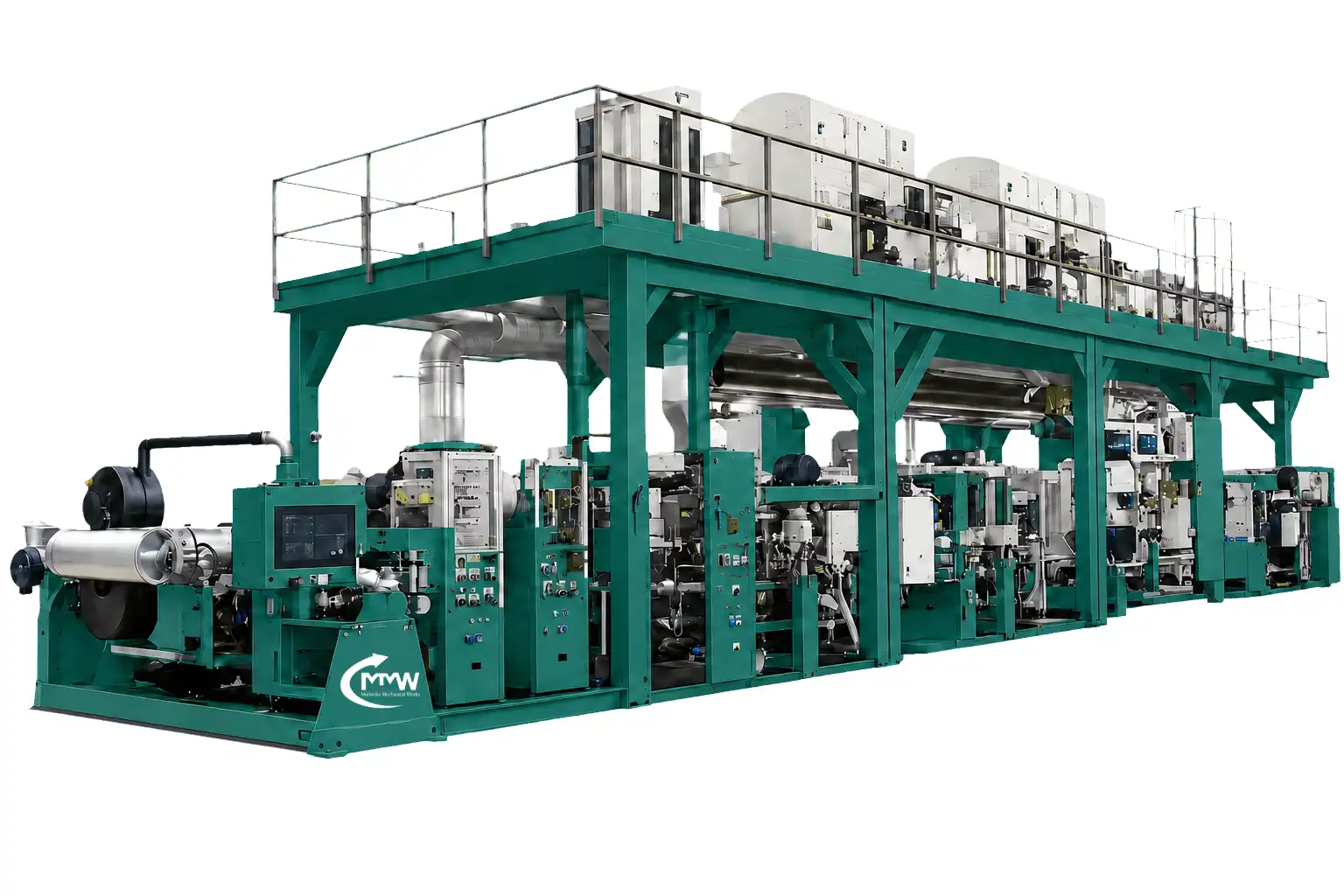
The water-based barrier coating machine for paper cups adds a regulated aqueous barrier layer to paper or paperboard used in manufacturing disposable cups and food-service containers. The coating has better resistance to water, oil and grease, and allows heat-sealing and cup-forming performance. Accurate coating transfer, controlled drying and reliable web handling lead to consistent output with less coating variation and less paper waste.
Request a Quote
Contact us today for machine specifications, pricing, and customized solutions.
Engineered for Paper Cup Barrier-Coating Production
Paper cup stock needs a functioning barrier since untreated paper will absorb water, oil and other substances. A plastic extrusion layer is often used in conventional cup manufacturing, but many converters are now looking into water-based dispersion coatings for select recyclable and lower-plastic packaging structures. The NnWater-Based Barrier Coating Machine for Paper Cups applies a measured aqueous formulation to the paper surface.
The coating fills and covers the paper structure to improve against liquid penetration, while keeping the flexibility essential for cup forming. The paper web is unwound with controlled tension and guided into the coating section. A controlled coating head applies the formulation evenly over the width required. The coated material then goes through a multi-zone dryer where moisture is removed slowly without over-heating, curling or weakening the paper. The paper is dried and cooled, and rewound into consistent rolls for printing, slitting, sheet cutting, cup blanking and shaping.
Designed for Barrier Performance and Heat Sealing
A paper cup coating must do more than stop liquid absorption. The completed material must also be able to endure creasing, side-wall shaping, bottom sealing and contact with hot or cold liquids. The coating can become brittle during converting and cracks may occur along folds and sealed sections. This machine controls coating weight, web tension and drying conditions to help produce a continuous, flexible barrier layer.
Depending on the formulation viscosity and the required coat weight, one can choose between air-knife, Mayer-bar, gravure, comma or other suitable coating methods. Balanced Airflow and individually adjustable temperature zones in the drying chamber The slower rate of moisture removal helps to reduce blistering, coating migration, paper distortion and surface blockage. If the coating chemical employed offers heat seal capability, the coated material can be transformed into paper cups and other food-service containers without a normal PE extrusion layer. Actual performance must be proven by sealing, migration, recyclability and end-use testing.
Why Controlled Drying Is Critical for Aqueous Coatings
Water-based barrier formulations contain moisture that must be removed uniformly before the paper is rewound. If drying is too fast at the beginning, the coating surface may form a skin while moisture remains trapped underneath. If not dried sufficiently, the completed roll may become sticky, block and show unstable barrier qualities.
Another set of problems can be caused by too much heat, such as paper curl, brittleness, shrinkage and reduced converting performance. The drying system must therefore balance temperature, airflow, dwell time and machine speed.
The Aqueous Barrier Coating Machine uses controlled drying zones to eliminate moisture progressively. This supports proper film formation and helps the finished coating remain intact during printing, creasing, blanking and cup forming.
Supporting Reduced- Plastic Paper Cup Manufacturing
Water-based dispersion coating can lessen dependence on conventional plastic extrusion in some paper-cup constructions. However, applying a water-based coating does not automatically make every finished cup plastic-free, recyclable or compostable.
These characteristics depend on:
✦ Chemical composition of the barrier coating
✦ Paper and coating compatibility
✦ Coating weight applied
✦ Cup-forming and heat-sealing performance
✦ Local recycling infrastructure
✦ Food-contact and migration compliance
✦ Repulpability or recyclability test results
Mohindra Mechanical Works is able to design coating machinery according to the customer’s chosen substrate and formulation. Chemicals and finished packaging should be certified by the coating supplier and an authorized testing laboratory.
35+ Years of Manufacturing Experience
Precision Engineering & Quality Manufacturing
Customized Machine Configurations to Your Needs
Fast and Reliable After-Sales Support
Products Manufactured
- Double-Wall Cup Paper: Coats compatible cup stock used in multi-layer cup structures requiring additional strength and thermal insulation.
- Food Container Paperboard: Supports paperboard coating for selected takeaway boxes, trays and disposable food containers.
- Disposable Bowl Paper: Produces barrier-coated stock for paper bowls used with soups, snacks, desserts and takeaway foods.
- Ice Cream Cup Stock: Creates coated paper with resistance to moisture, oil and low-temperature food-service conditions.
- Cold Drink Cup Paper: Applies a moisture-resistant layer to paper used for water, juice, soft drinks and other cold beverages.
- Hot Beverage Paper Cup Stock: Produces barrier-coated paper for cups used to serve tea, coffee and other hot beverages.
Key Features
- Multi-Zone Drying System: Independently controlled drying zones remove moisture gradually and help achieve stable film formation.
- Controlled Paper Tension: Coordinated unwinding and rewinding minimize wrinkles, web breaks and paper deformation.
- Accurate Edge Guiding: Automatic web alignment keeps the paper centred through coating, drying and rewinding.
- Single- or Double-Side Coating: The line can be configured for one-side coating or both-side treatment according to the cup structure.
- Heat-Sealable Coating Capability: Compatible heat-sealable barrier formulations can be processed using an appropriately configured coating and drying system.
- Reduced Coating Wastage: Accurate metering controls excessive formulation transfer and helps maintain consistent consumption per roll.
Frequently Asked Questions
It may support improved repulpability or recyclability, but this depends on the coating chemistry, applied weight and local recycling process. Laboratory testing is required.
The supported range depends on the machine’s tension system, coating method and drying arrangement. It can be customized around the customer’s cup-stock specifications.
Yes, provided the machine is configured for the formulation’s coating, drying and curing requirements.
Air-knife, Mayer-bar, gravure, reverse-roll and comma coating methods may be used depending on formulation viscosity and required coat weight.
Yes. A double-side or two-station configuration can be provided when the paper structure requires coating on both surfaces.
Food-contact suitability depends on the selected coating chemical, paper and finished-product testing. The machinery itself does not provide food-grade certification.
It can process compatible dispersion coatings developed as alternatives to conventional PE layers. The finished paper must still pass sealing, barrier and end-use testing.
Depending on its formulation and coating weight, it can improve resistance to water, oil, grease, moisture and selected beverage contents.
It is an industrial roll-to-roll machine that applies an aqueous functional coating onto paper or paperboard used for producing cups and food-service containers.