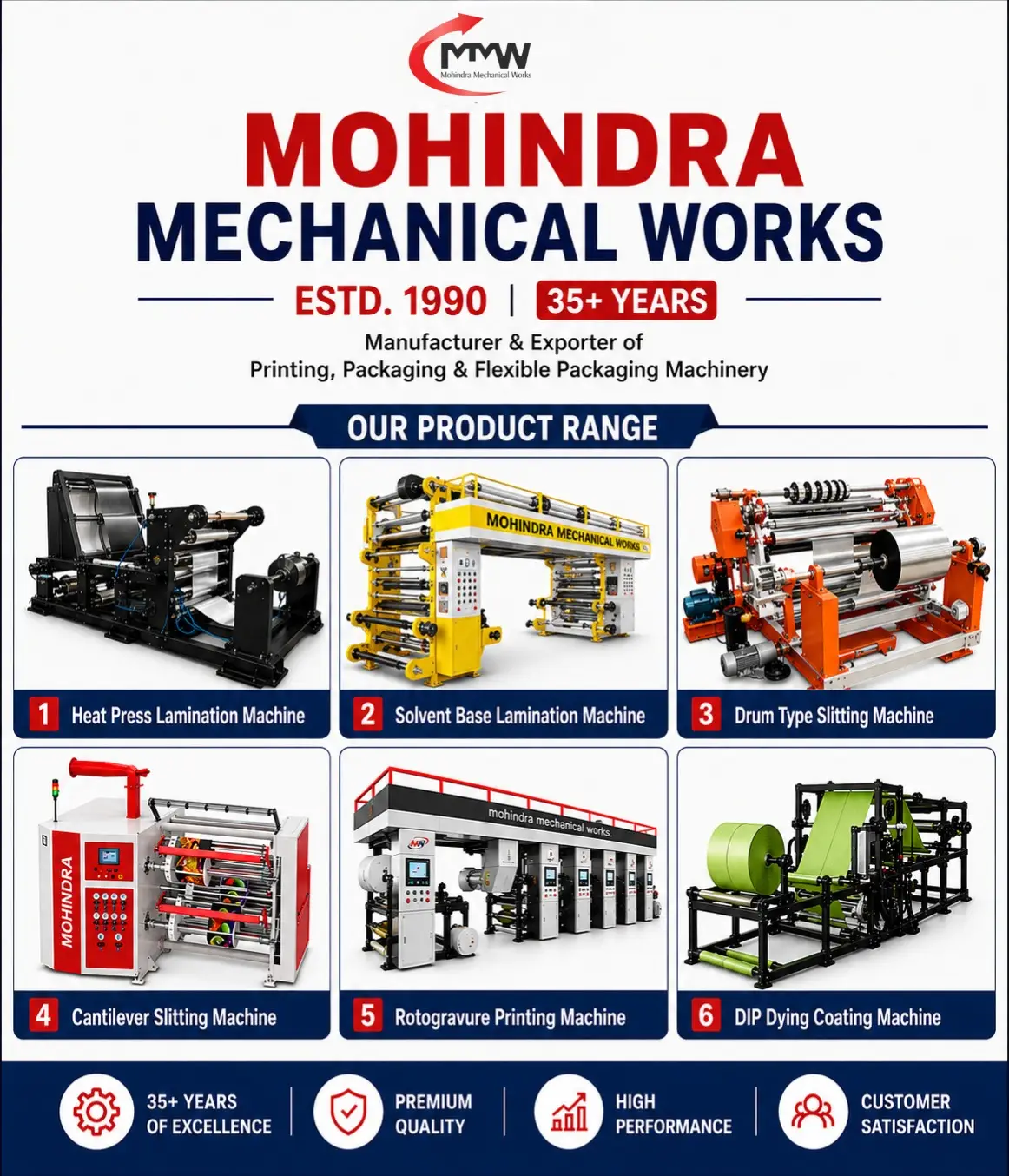
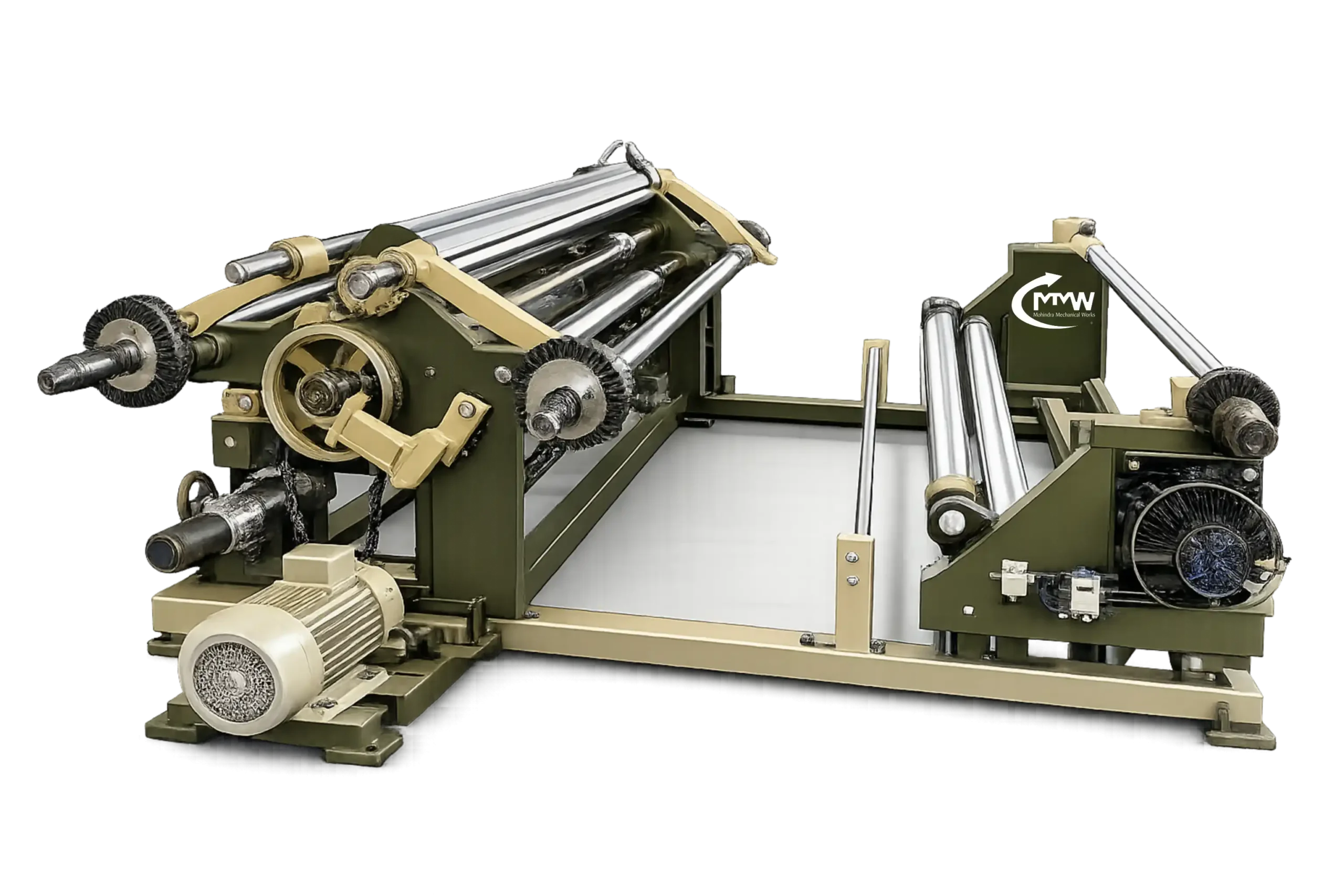
Cantilever Differential Shaft Slitter Rewinder Machine
Individual Roll-Tension Control with Fast Cantilever Roll Handling
Our Cantilever Differential Shaft Slitter Rewinder Machine is for precision slitting & controlled rewinding of flexible films, foil, paper and laminated materials. Its differential rewind shaft accommodates slight thickness changes between split rolls, while the cantilever design facilitates easy roll loading, unloading and quicker production changeovers.
Request a Quote
Contact us today for machine specifications, pricing, and customized solutions.
Engineered for Consistent Multi-Roll Rewinding
When a big master roll is slit into a number of finished rolls, small variations in material thickness can accumulate during the re-winding stage. If all rolls are driven with the same speed and torque, some rolls will be too tight and others will be too loose.
The Differential Shaft Slitter Rewinder addresses this issue by providing controlled slip between specific rewind elements. Each finished roll receives the torque required to maintain more constant winding tension as its diameter grows.
This system helps to reduce loose rolls, crushed cores, telescoping and uneven roll hardness. It is notably beneficial for flexible packaging films, laminates and other materials where slight gauge fluctuations are typical across the web.
Designed for Faster Roll Loading and Unloading
The cantilever architecture allows access to the rewinding part from one side of the machine. Operators can remove finished rolls without removing a fully supported shaft arrangement, thus minimizing the time necessary between production cycles.
This open design provides better visibility around the rewind portion. Operators can more easily inspect roll formation, make modifications as necessary and discover web-handling concerns.
The Cantilever Slitter Rewinder Machine provides an efficient combination of precision winding and excellent finished-roll handling for continuous conversion operations when paired with a differential air shaft.
Why Differential Rewinding Improves Finished-Roll Quality
Minor thickness variations can be introduced during the coating, printing and laminating operations and become significant after multiple layers have been re-wound.
On a standard locked shaft, all slit rollers rotate together. A roll made from a slightly thicker segment develops in diameter faster and may receive excessive tension. In reality, the winding needs of the rolls from thinner sections may be different, such that they may become loose.
Differential Air Shaft Slitting Machine Separate rewind elements can slip at controlled rates. This compensates for roll-diameter variation and provides more balanced winding. The result is improved roll hardness, straighter edges and more dependable performance on downstream machines.
35+ Years of Manufacturing Experience
Precision Engineering & Quality Manufacturing
Customized Machine Configurations to Your Needs
Fast and Reliable After-Sales Support
Material Applications
- Specialty Paper: Processes selected coated, release, label and industrial paper substrates according to the cutting configuration.
- Printed Film Rolls: Slits printed packaging webs into application-specific widths while supporting proper material alignment.
- Aluminium Foil: Can be configured for delicate aluminium foil and laminated foil used in food, pharmaceutical and industrial packaging.
- Metallized Film: Converts compatible metallized film with smooth handling to reduce wrinkles, surface marking and edge damage.
- Laminated Packaging Material: Processes multi-layer laminates while maintaining controlled web tension and consistent roll formation.
- Flexible Packaging Films: Suitable for slitting BOPP, PET, CPP, PE, LDPE and other compatible flexible packaging films.
Key Features
- Uniform Roll Hardness: Differential winding helps maintain consistent density across rolls with minor thickness variations.
- Precision Slitting System: Razor or shear slitting options can be selected according to the substrate and required edge quality.
- Automatic Tension Control: Regulated unwind and rewind tension helps prevent wrinkles, stretching and loose roll formation.
- Accurate Web Guiding: An electronic web-guide system maintains material alignment before slitting and helps reduce uneven edge trim.
- Cantilever Rewinding Design: Allows convenient one-side roll removal, supporting faster changeovers and reduced operator handling time.
- Differential Rewind Shaft: Provides controlled slip and torque distribution to maintain individual tension across multiple finished rolls.
Frequently Asked Questions
Yes. Automatic tension control can adjust material tension as the unwind roll becomes smaller and the finished rolls increase in diameter.
Correct tension, differential torque and suitable winding pressure significantly reduce telescoping. Material quality and correct operating settings also influence the final result.
Razor and shear slitting systems can be provided depending on the material thickness, structure and required finished-edge quality.
Yes. Automatic web guiding and controlled tension help maintain printed-web alignment during slitting and rewinding.
The cantilever arrangement makes finished rolls more accessible from one side. This reduces roll-change time and simplifies routine machine operation.
Depending on the selected configuration, it can process BOPP, PET, CPP, PE, LDPE, metallized film, laminates, aluminium foil and selected paper materials.
A conventional shaft generally rotates all finished rolls together. A differential shaft permits controlled individual slip, allowing each roll to adjust according to its winding requirement.
A differential shaft distributes controlled torque to individual slit rolls. It compensates for minor thickness and diameter variations, helping maintain consistent winding tension.
It is a roll-converting machine that cuts wide material into narrow rolls and rewinds them on a differential shaft. Its cantilever design allows easier access for loading and unloading finished rolls.