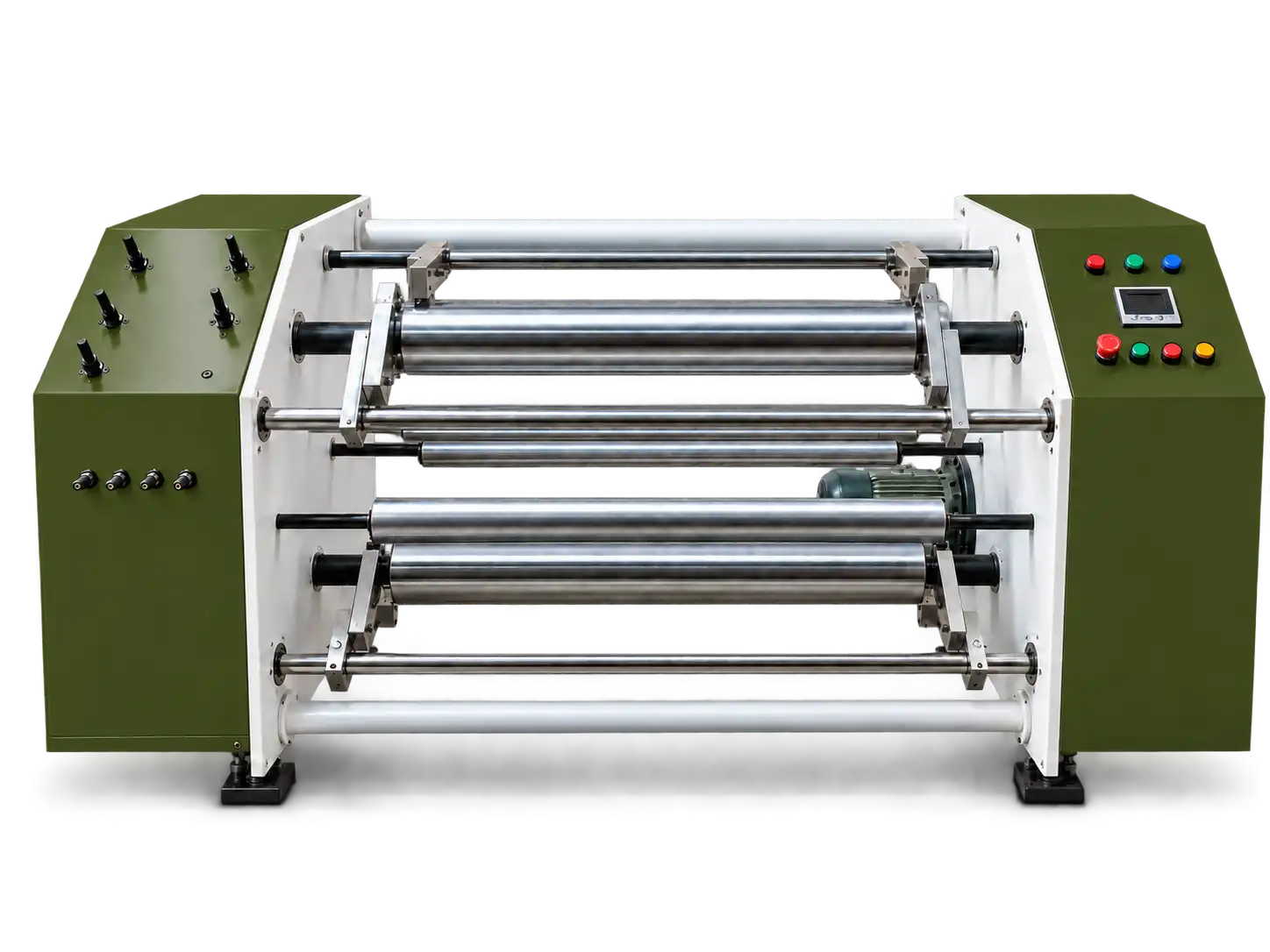

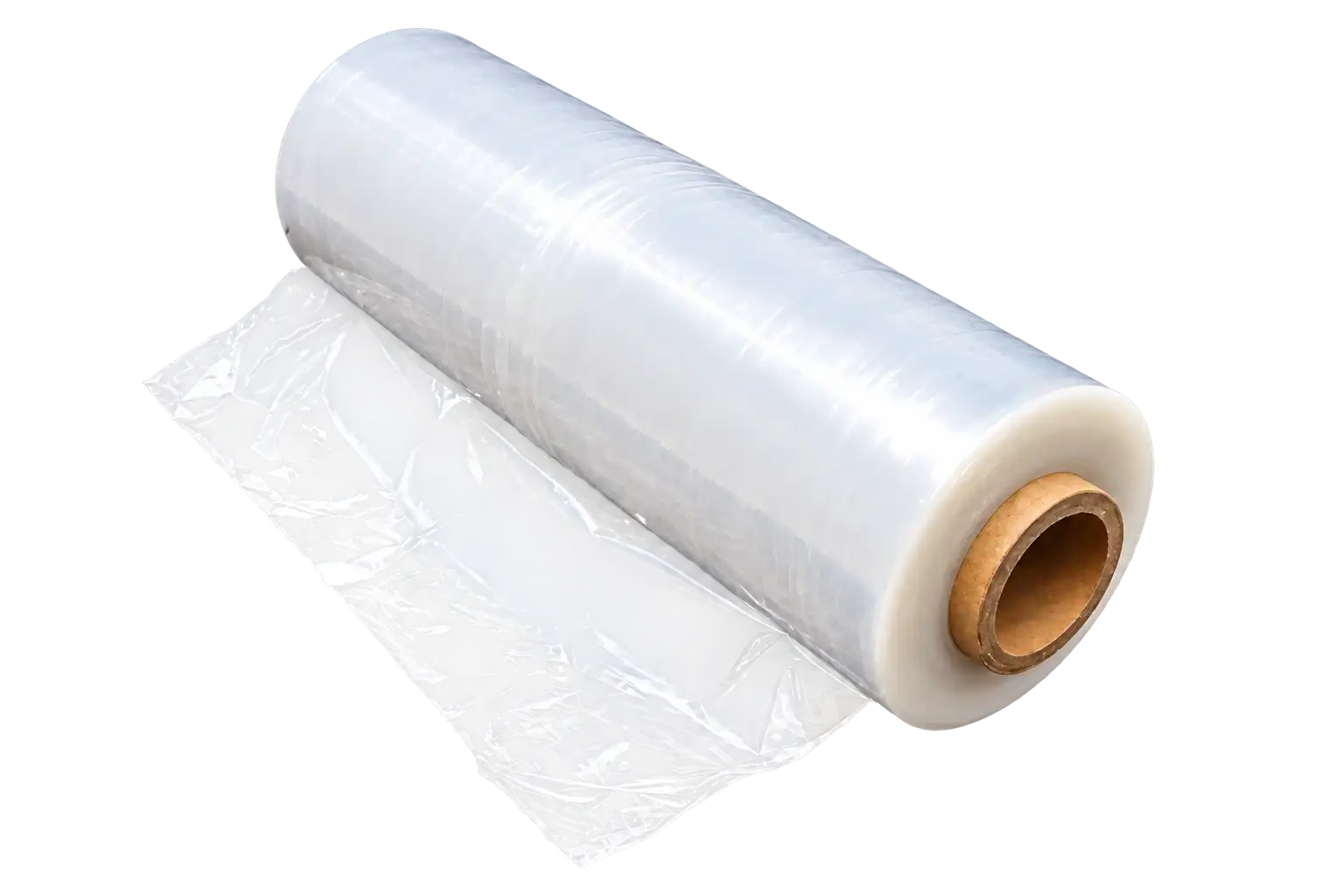
Cling Film Rewinder Machine
Convert Jumbo Cling Film Rolls into Convenient Wrapping Rolls
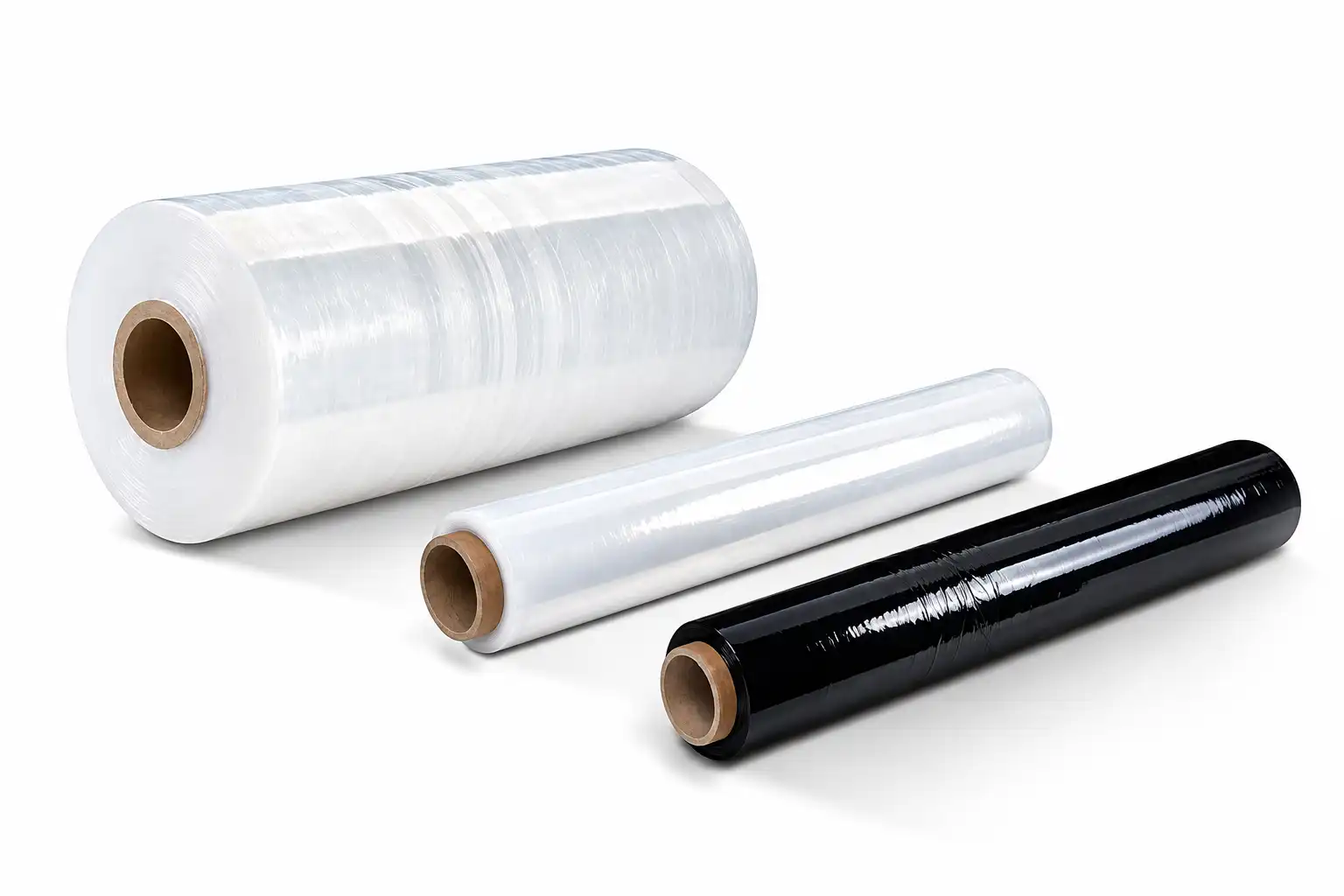
A Cling Film Rewinder Machine transfers film from a large parent roll onto smaller cores to prepare rolls for everyday wrapping. It is used by film converters and packaging suppliers serving household, catering and commercial packaging requirements.
Cling film needs careful handling because it is thin, flexible and tends to cling to contact surfaces. Suitable film tension and winding pressure help form neat rolls that unwind smoothly during use.
Request a Quote
Contact us today for machine specifications, pricing, and customized solutions.
Cling Film Rewinding for Practical Roll Sizes
Different customers need different roll formats. A household wrapping roll may have different length and core requirements from a roll supplied to a restaurant or catering business.
Rewinding allows converters to prepare these formats from larger parent rolls. During the process, the film must travel evenly and wind correctly onto the core to avoid loose layers, wrinkles or excessive stretching.
Selecting a cling film roll rewinding machine starts with the material being processed, parent roll dimensions and required finished roll size.
Cling Film Slitting Rewinder Machine
A Cling Film Slitting Rewinder Machine combines width conversion with rewinding. Where the machine includes a suitable slitting arrangement, it divides a wider film web into narrower sections before winding them onto separate cores.
This is useful when a packaging supplier needs several roll widths from the same parent material. Blade positioning, film alignment and tension settings all influence the quality of the finished rolls.
Rewinding alone changes the roll format or length; slitting also changes the film width. The appropriate arrangement depends on the products you intend to supply.
Why Careful Film Handling Matters
Cling film should pull from the finished roll evenly without unnecessary tearing or distortion. Problems introduced during conversion can make the roll difficult to use, even when its outer appearance looks acceptable.
Too much tension can stretch the film, while insufficient tension can leave loose winding. Misaligned cores or uneven winding pressure can also affect the shape of the finished roll. Controlled handling throughout the process helps produce consistent cling film rolls that are easier to pack, dispense and use.
35+ Years of Manufacturing Experience
Precision Engineering & Quality Manufacturing
Customized Machine Configurations to Your Needs
Fast and Reliable After-Sales Support
Packaging Applications
- Packaging Conversion Businesses: Rewind purchased parent rolls into customer-required lengths and roll sizes.
- Width-Specific Orders: Produce narrower film formats where a suitable slitting arrangement is included.
- Institutional Kitchens: Supply suitable roll sizes for hotels, canteens and other large kitchen operations.
- Retail Packaging Supplies: Prepare finished roll formats for packaging distributors and retail customers.
- Food Preparation Areas: Supply wrapping rolls for covering suitable trays, bowls and containers with appropriately approved film.
- Restaurant and Catering Supplies: Convert parent rolls into formats suited to commercial kitchens and catering operations.
Key Features
- Material-Based Setup: Film path, contact surfaces and operating settings should suit the cling film being processed.
- Length Measurement Options: Can support measured roll preparation when suitable measuring and control equipment is included.
- Slitting Configuration: Enables width conversion where the appropriate cutting arrangement is provided.
- Core Positioning: Helps maintain alignment during finished roll formation.
- Controlled Winding Pressure: Supports even film build-up on the core.
- Film Tension Adjustment: Helps manage thin film without applying unnecessary stretching force.
- Parent-to-Finished Roll Rewinding: Transfers cling film from larger rolls onto smaller rewind cores.
Frequently Asked Questions
Share the film material, thickness, parent roll width and diameter, finished roll width and length, core dimensions and slitting requirements. These details help Mohindra Mechanical Works assess the required configuration.
No. Food-contact suitability depends on the film itself, its approved conditions of use and appropriate handling. A rewinding machine does not make an unsuitable material food-safe.
Cling film is thin and can stretch or wrinkle during conversion. Suitable tension helps guide the material and form an even roll without pulling it excessively.
Different lengths can be prepared when the machine has suitable length measurement and control equipment. The available range and measuring accuracy should be confirmed for the selected model.
Compatibility must be checked for the selected machine. PVC and PE cling films can behave differently during handling, so the film material, thickness and cling characteristics should be confirmed before selection.
Rewinding transfers film onto another core to change the roll format or length. Slitting cuts the film into narrower widths. A Cling Film Slitting Rewinder Machine performs both operations when equipped with a suitable cutting arrangement.
A Cling Film Rewinder Machine transfers cling film from a large parent roll onto smaller cores. It prepares finished rolls in formats required for household, catering and other wrapping applications.