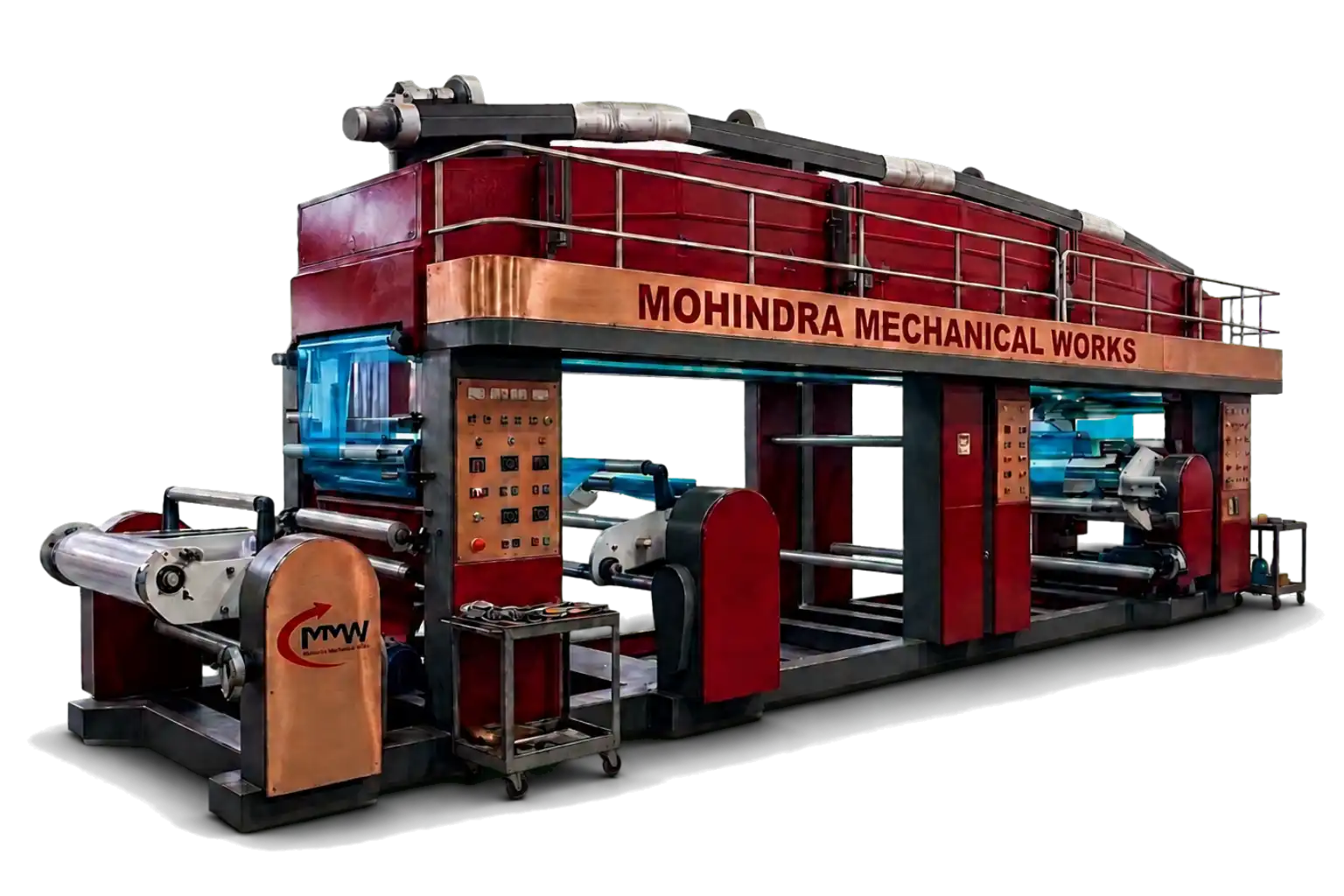
Paper Film Lamination Machine
Precision Paper-to-Film Bonding for Protective and Decorative Laminates
Our Paper Film Lamination Machine laminates paper with BOPP, PET, PE or other appropriate plastic films creating a smooth, durable and visually enhanced laminated material. Controlled adhesive application, correct web alignment and uniform nip pressure for consistent roll to roll production.
It is suited for printed paper, packaging paper, ornamental paper, labels, book covers and specialty conversion products. The steady tension and rewinding technologies help prevent wrinkles, trapped air, film shrinkage and uneven final rolls.
Request a Quote
Contact us today for machine specifications, pricing, and customized solutions.
Engineered for Uniform Paper-to-Film Lamination
Paper and plastic film act differently in the production process. Paper is hygroscopic and may change dimensions with moisture content . Thin film may stretch or wrinkle if put under high force . A reliable lamination method must consequently be able to independently control the movement of both substrates.
The Paper to Film Lamination Machine unwinds paper and film via individually regulated stations The paper or substrate is coated with a measured layer of adhesive, and then the two materials meet at the lamination nip.
The adhesive is placed under even pressure and any excess air bubbles are removed. When a suitable water based adhesive is used, the moisture can escape through the absorbent paper layer and the laminate can then form a stable bond.
Designed to Improve Surface Protection and Appearance
The plastic film is a protective covering, but it does not cover the print pattern below. Depending on the film, the resulting material can have a glossy, matte, translucent, textured or moisture-resistant surface.
The equipment ensures perfect alignment between printed paper and film during production. Controlled tension prevents stretch of the film, and adjustable nip pressure gives level bonding over the whole working width.
After lamination, the material passes through the requisite drying or stabilization step before being rewound. The final rolls may then be slit, cut into sheets, printed, die-cut or otherwise converted.
Why Paper-Foil Lamination Needs Controlled Processing
Paper absorbs moisture and may expand during wet lamination. Plastic film does not absorb adhesive moisture and may stretch when excessive tension is applied. If these differences are not managed properly, the finished material can curl, wrinkle or develop bubbles.
Important production variables include:
✦ Paper GSM and moisture content
✦ Film type and thickness
✦ Film surface treatment
✦ Adhesive chemistry and viscosity
✦ Applied coating weight
✦ Web tension
✦ Nip pressure
✦ Drying temperature
✦ Rewinding torque
A properly configured Paper Film Lamination Machine balances these parameters to produce stable, flat and uniformly bonded rolls.
35+ Years of Manufacturing Experience
Precision Engineering & Quality Manufacturing
Customized Machine Configurations to Your Needs
Fast and Reliable After-Sales Support
Products Manufactured
- Custom Laminated Paper Rolls: Finished rolls produced according to the buyer’s required width and material combination.
- Speciality Packaging Paper: Moisture-resistant and decorative material for boxes, sleeves and outer packaging.
- Advertising and Display Material: Laminated paper for posters, promotional sheets and point-of-sale displays.
- Paper Plate Raw Material: Compatible paper and PE-film structures for disposable plate production.
- Food-Wrapping Paper: Suitable paper-film laminates produced using approved food-contact materials.
- Paper Bag Material: Laminated printed paper for compatible shopping, gift and speciality paper bags.
- Label and Sticker Material: Paper-film structures for selected product labels and promotional applications.
- Gift-Wrapping Paper: Decorative film-laminated paper for premium wrapping and presentation applications.
- Book and Notebook Covers: Glossy or matte laminated cover material with improved resistance to handling.
- Laminated Printed Paper: Protective film-laminated paper for packaging and commercial printing.
Key Features
- Customizable Machine Design: Working width, roll capacity, drying arrangement and automation can be configured.
- Reduced Production Waste: Accurate web alignment helps minimize edge loss and rejected rolls.
- Adjustable Operating Parameters: Allows control of speed, adhesive application, tension and pressure.
- Smooth Finished-Roll Rewinding: Produces compact rolls with aligned edges and uniform winding tension.
- Glossy and Matte Lamination: Supports different surface appearances based on the selected film.
- Compatible with Multiple Films: Processes suitable BOPP, PET, PE and other paper-lamination films.
- Consistent Nip Pressure: Ensures proper surface contact across the complete working width.
- Accurate Paper-Web Handling: Maintains smooth paper movement across different GSM ranges.
- Stable Film-Tension Control: Prevents stretching, wrinkles and film-tracking problems.
- Uniform Adhesive Coating: Applies a controlled adhesive layer for consistent paper-to-film bonding.
Frequently Asked Questions
Yes. Inline slitting or roll-to-sheet cutting attachments can be provided according to production requirements.
Yes. Suitable water-based adhesives can be used for wet paper-to-film lamination, subject to substrate and end-use compatibility.
A Paper Film Lamination Machine bonds paper with plastic films such as BOPP, PET or PE. A Paper Foil Lamination Machine specifically handles aluminium foil with paper.
Yes. It can produce suitable laminated paper used for shopping bags, gift bags and speciality packaging.
Yes. Compatible glossy, matte and transparent films can be used according to the required finished-paper appearance.
Depending on machine configuration and adhesive compatibility, BOPP, PET, PE and other suitable films can be processed.
A Paper Film Lamination Machine bonds paper with BOPP, PET, PE or another compatible plastic film using controlled adhesive coating, pressure and roll-to-roll web handling.