Poly & Paper Lamination Machine
Efficient Lamination of Poly Film with Paper Substrates
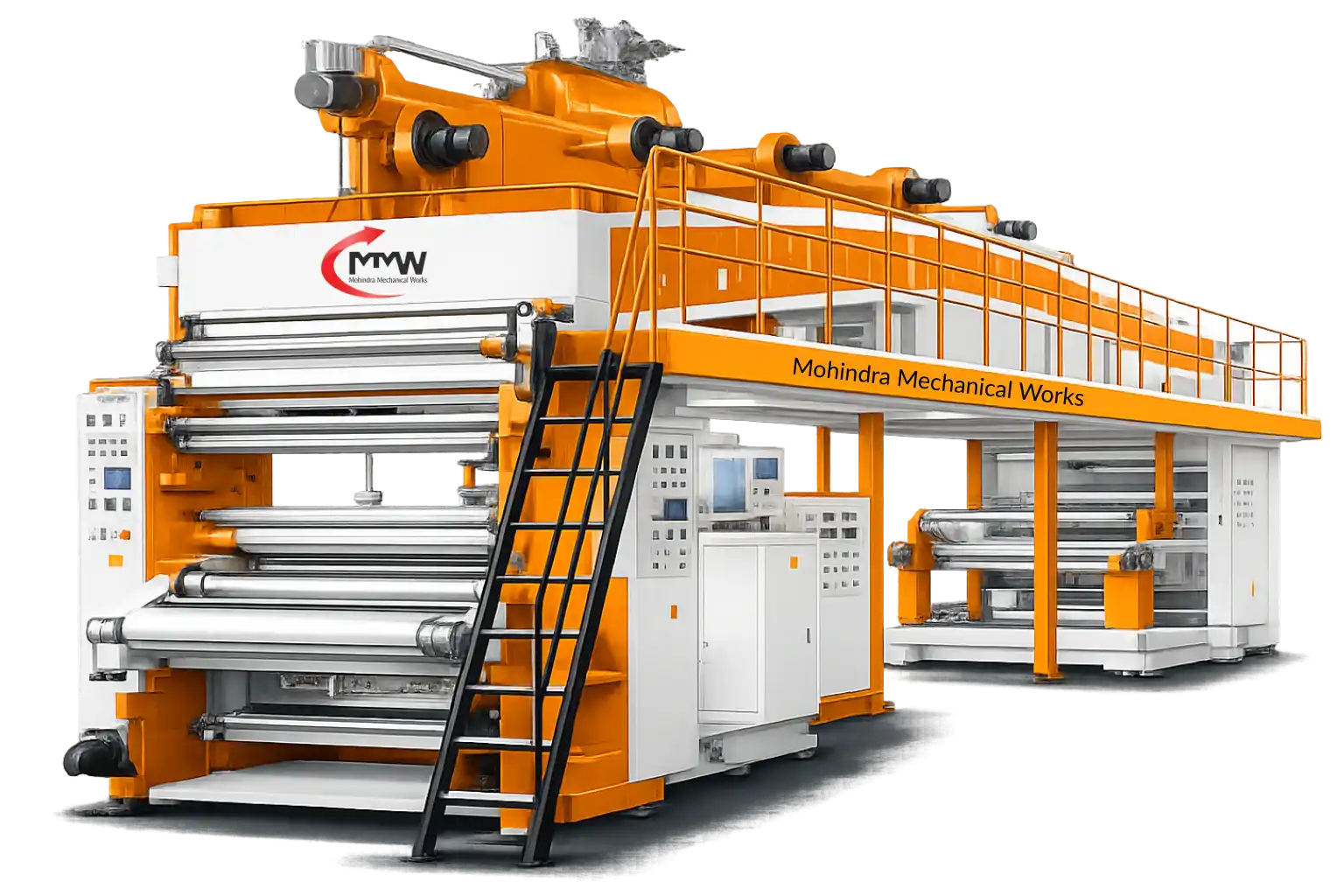
The Poly & Paper Lamination Machine has been engineered in order to laminate paper with compatible polyethylene (PE/poly). This has been achieved through the use of consistent application of adhesion, precise web tension and consistent lamination pressure.
As paper and poly film are two different materials, they will be handled differently by the machine. This is done in order to reduce creasing of paper, stretching of film, wrinkle forming and proper winding of final roll.
Request a Quote
Contact us today for machine specifications, pricing, and customized solutions.
Engineered for Stable Paper & Poly Film Handling
Paper needs to be under tension in order to avoid ripping, curling, and creasing, while polyethylene film will stretch and move in case the tension in the web is not kept constant. This is done using independent tension control and web guiding of both substrates in order to keep them stable during the lamination process.
The adhesive will be applied evenly depending on the process chosen before the two substrates are fed into the lamination unit. Pressure in the nip and correct alignment of the web will ensure that both substrates stay in touch with each other during the process.
Designed for Continuous Poly-to-Paper Lamination
The Poly and Paper Lamination Machine is engineered for roll-to-roll processing, and includes operations for unwinding of materials, application of adhesives, laminating and winding. Web handling mechanism is precisely controlled in order to facilitate proper handling of both papers and poly films, thus reducing chances of formation of wrinkles and misalignment.
Parameters can be set based on the type of paper, thickness of poly films, adhesive system, and other requirements related to lamination process. If needed, drying can be performed prior to laminating. Tension control during the entire operation will ensure good quality of bonding and finished rolls.
Why Laminate Poly Film with Paper?
Polyethylene film laminated paper incorporates the attributes of both the substances in one package. The paper can offer printability and rigidity, but an appropriate poly layer may impart attributes like water resistance, flexibility and heat sealing, among others, based on the PE grade and the laminate construction.
Successful production demands adequate control of adhesive quantity, web tension, positioning of the substrate and lamination pressure. The use of a Poly & Paper Lamination Machine ensures such process control in order to bond the materials successfully without subjecting the paper to undue stress.
35+ Years of Manufacturing Experience
Precision Engineering & Quality Manufacturing
Customized Machine Configurations to Your Needs
Fast and Reliable After-Sales Support
Packaging Applications
- Specialty Laminated Paper: Supports customized paper and poly combinations according to specific product and processing requirements.
- Industrial Paper Laminates: Suitable for producing paper-poly composite materials used in various industrial and converting applications.
- Moisture-Resistant Paper Products: Poly film can provide a protective layer for selected paper products where improved resistance to moisture is required.
- Printed Paper Lamination: Allows compatible printed paper to be laminated with poly film for added protection and required functional properties.
- Food Packaging Structures: Can produce suitable paper-poly laminates for selected food packaging applications when compliant substrates, adhesives and inks are used.
- Pouches & Bags: Suitable for laminated material subsequently converted into compatible paper-based bags, pouches and related packaging formats.
- Paper-Based Flexible Packaging: Produces paper-poly laminate structures for selected flexible packaging and converting applications.
Key Features
- Configurable Drying Arrangement: A suitable drying system can be incorporated where required by the selected adhesive technology.
- Adjustable Process Parameters: Allows machine settings to be adapted according to paper grade, film thickness and job requirements.
- Controlled Nip Pressure: Provides uniform contact between the paper and poly layers for consistent bonding.
- Accurate Web Guiding: Helps maintain proper alignment of both substrates before and during lamination.
- Uniform Adhesive Application: Provides controlled adhesive distribution across the required working width.
- Independent Tension Control: Maintains suitable web tension for paper and poly film according to their different material characteristics.
- Paper & Poly Film Processing: Designed for controlled lamination of compatible paper substrates with polyethylene film.
Frequently Asked Questions
It can be, depending on the polyethylene grade, exposed sealing layer and overall laminate construction. The required PE film should be selected according to the final sealing application.
This depends on the adhesive technology used. If the selected adhesive requires drying before bonding, an appropriate drying section can be incorporated into the machine.
Paper and poly film behave differently under tension. Proper control helps prevent paper creasing or tearing and excessive stretching of the poly film, while maintaining accurate substrate alignment.
Yes. Compatible printed paper can be laminated with suitable poly film, provided the printing ink, adhesive and substrates are appropriate for the intended lamination process.
The machine can be configured for different compatible paper grades within its designed operating range. Actual suitability depends on factors such as paper thickness, surface characteristics, strength and adhesive compatibility.
In this application, poly generally refers to polyethylene (PE) film. The exact type and grade of polyethylene should be selected according to the required finished product and lamination process.
A Poly & Paper Lamination Machine is used to bond compatible polyethylene film with paper through a controlled lamination process, producing a combined paper-poly structure in continuous roll form.