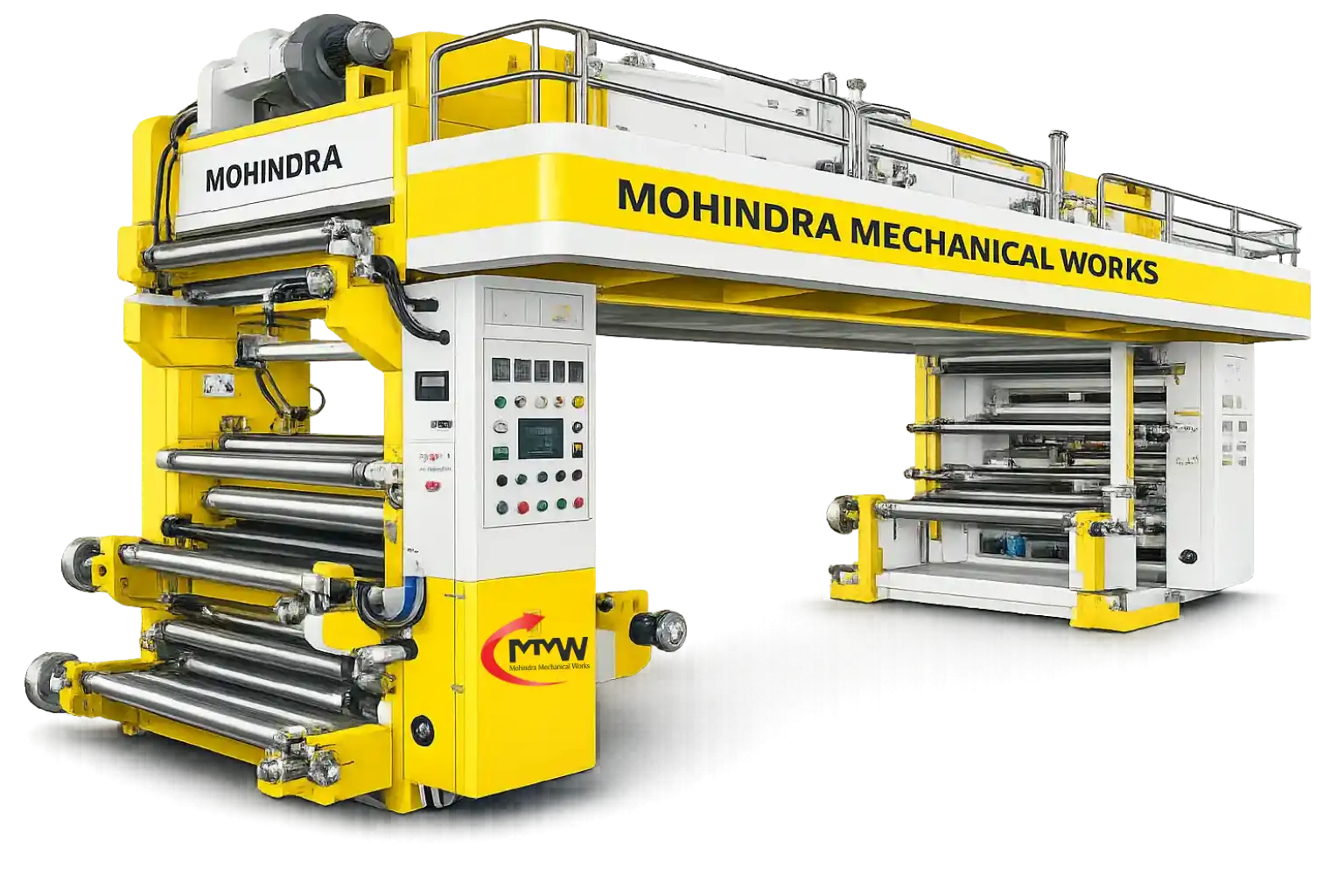
FMCG Lamination Machine
Reliable Lamination Solutions for High-Volume FMCG Packaging
Our FMCG Lamination Machine is engineered to manufacture laminated products that are extensively employed in the field of FMCG packaging manufacturing. The lamination process involves the perfect control of the adhesive dispensing, the appropriate web tension, the accurate lamination pressure and rewinding.
Being intended for the converters who frequently deal with packaging production on a large scale, the machine enables processing compatible combinations of printed films, flexible films, metallized products and aluminum foil. Controlled roll-to-roll operation of the machine allows its employment in FMCG packaging manufacturing for food, snacks, personal care products and household goods.
Request a Quote
Contact us today for machine specifications, pricing, and customized solutions.
Engineered for Consistent FMCG Packaging Production
In the case of FMCG packaging, the packaging machinery requires that there should be a certain level of consistency in terms of quality in mass manufacturing, and any changes in bonding or web tension would make an impact on the printing and slitting process. This machinery will ensure stable movement of substrate and web control through the entire lamination process.
The adhesive is spread in a uniform manner on the necessary width of the process, and then there is a combination of substrates with a certain amount of pressure applied for laminating. Tension control plays an important role in maintaining the alignment of different films, avoiding any wrinkles.
Designed for Flexible & Multilayer Packaging Structures
The FMCG Lamination Machine can be set up to accommodate a great number of substrate options such as PET, BOPP, CPP, PE, metallized films, and aluminum foil. The aforementioned substrates can be used in combination with one another when creating multi-layer structures based on the needs of the finished product.
All stages of operation including unwinding and adhesive application, lamination and rewinding are coordinated in order to ensure consistent operating conditions throughout the process. Web guidance ensures accurate positioning of substrates, while controlled rewinding will produce tight, precisely rolled finished rolls.
Why Lamination is Important for FMCG Packaging
Not all modern FMCG products need only one layer in their packaging films. Films of different materials are laminated, allowing each of them to give some specific characteristics to the laminate, like printable, barrier, strength, heat-sealable properties, among others, according to its construction.
Correctly controlling the lamination process also guarantees that the graphics are well protected in the laminate, allowing the packaging to keep its aesthetics and at the same time have the properties it needs.
The FMCG Lamination Machine controls this process to allow the production of these multilayers consistently and therefore is a good option for converters of different FMCG packaging market segments.
35+ Years of Manufacturing Experience
Precision Engineering & Quality Manufacturing
Customized Machine Configurations to Your Needs
Fast and Reliable After-Sales Support
Packaging Applications
- Metallized & Barrier Packaging: Suitable for selected structures incorporating metallized films or aluminium foil where enhanced barrier properties are required.
- Printed Flexible Packaging: Laminates compatible printed films with sealant, barrier or protective layers for attractive consumer packaging.
- Home-Care Packaging: Produces laminated material for compatible detergent, cleaning-product and refill packaging applications.
- Personal Care Packaging: Suitable for flexible laminate structures used for shampoos, cosmetics, hygiene products and other personal-care items.
- Stand-Up & Flexible Pouches: Creates laminated roll stock for subsequent conversion into stand-up, zipper, centre-seal and other pouch formats.
- Food Packaging: Produces compatible multilayer structures for spices, dry foods, cereals and various packaged food products.
- Snack & Confectionery Packaging: Suitable for laminate structures used for chips, namkeen, biscuits, chocolates, candies and similar consumer products.
Key Features
- Uniform Finished Rewinding: Controlled winding helps produce compact and properly aligned rolls ready for further converting.
- Multiple Substrate Compatibility: Can be configured for compatible films, metallized substrates and foil-based packaging structures.
- Controlled Lamination Pressure: Maintains consistent substrate contact for uniform bonding across the web.
- Precise Web Guiding: Helps keep multiple substrates properly aligned throughout continuous production.
- Accurate Tension Control: Maintains stable web movement during unwinding, coating, lamination and rewinding.
- Precision Adhesive Application: Provides controlled and uniform adhesive coating across the required working width.
- High-Volume Production Capability: Designed to support continuous lamination requirements of FMCG packaging converters.
Frequently Asked Questions
Yes. Production parameters can be adjusted for various compatible film-to-film, film-to-metallized-film and film-to-foil laminate structures, depending on machine configuration.
Yes, the machine can produce laminates intended for selected food-packaging applications. The substrates, inks, adhesives and finished construction must meet applicable food-contact and packaging requirements.
Yes. Compatible printed films can be combined with suitable secondary substrates to produce multilayer printed packaging structures.
Different layers can provide different functions, including printability, barrier properties, mechanical strength and heat-sealing performance. The exact structure depends on the product and packaging requirements.
Depending on the machine configuration and adhesive compatibility, materials can include PET, BOPP, CPP, PE, metallized films, aluminium foil and other flexible packaging substrates.
An FMCG Lamination Machine is used to bond two or more compatible flexible substrates to produce multilayer packaging material for fast-moving consumer goods such as food, snacks, personal-care and household products.