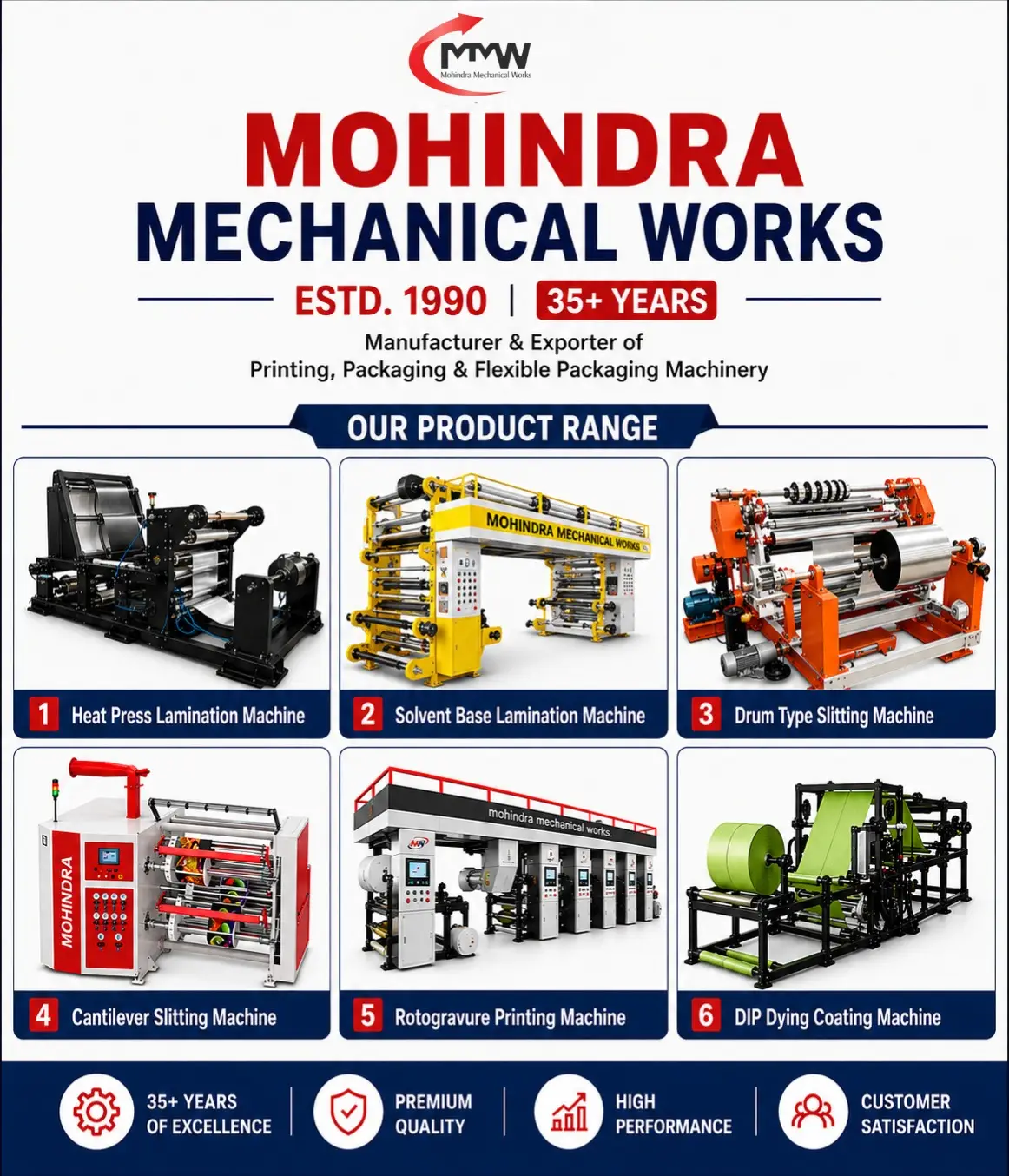
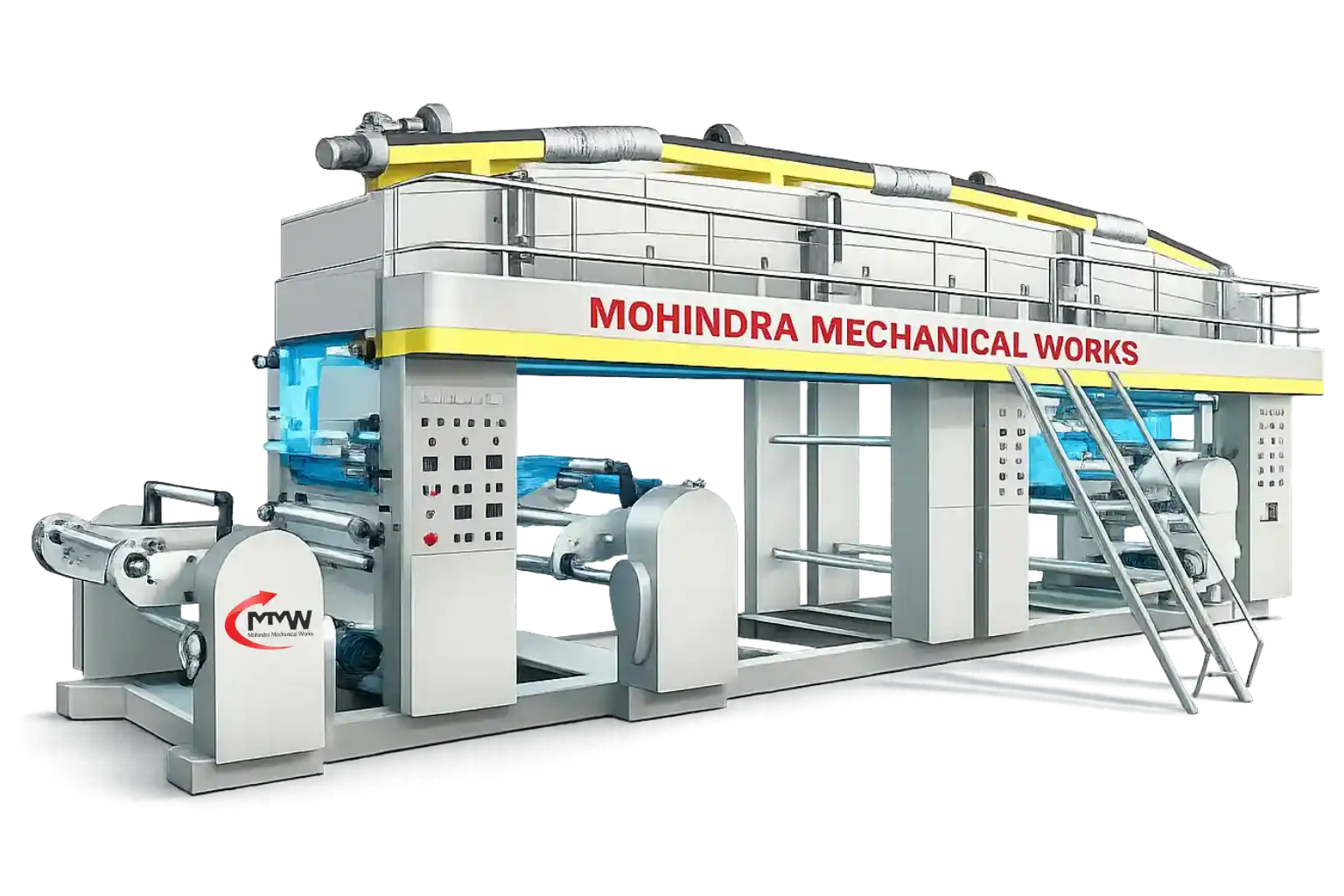
Paper Foil Lamination Machine
Precision Wet Lamination for Strong and Uniform Paper-Foil Structures
Our Paper Foil Lamination Machine laminates paper with aluminum foil by precisely applying adhesive, controlling web alignment and providing uniform lamination pressure. The machine generates flat, uniformly bonded rolls for wrapping, insulation, decorative paper and specialist packaging applications.
The roll-to-roll design ensures a stable tension for processing paper and fragile foil substrates. Adjustable coating, nip-pressure and rewinding controls assist in the reduction of wrinkles, trapped air, loose edges and uneven roll formation during continuous industrial production.
Request a Quote
Contact us today for machine specifications, pricing, and customized solutions.
Engineered for Accurate Paper-to-Foil Bonding
The handling characteristics of paper and aluminium foil are very different. Paper is hygroscopic and will change in size upon absorption of moisture. Excessive tension will wrinkle, crease or rupture thin foil. Achieving a reliable laminate therefore requires coordinated control of adhesive coating, web tension, alignment and bonding pressure.
Both substrates are individually fed to the laminating area by the Paper Foil laminating Machine. A measured layer of compatible liquid glue is placed to the selected web before the materials are connected at a pressure-controlled nip.
Paper is porous and allows moisture in the glue to escape in the wet lamination. This helps create an effective bond without requiring the long drying arrangement generally associated with certain film-to-film lamination processes.
Designed to Reduce Wrinkles, Curling and Delamination
Common problems in paper-foil lamination are edge lifting, foil wrinkles, paper curling and incomplete bonding. These problems are often caused by excess adhesive, uneven nip pressure, unstable tension or incorrect material alignment.
The equipment maintains a regulated paper and foil route through properly aligned rollers. Stable tension helps maintain the foil flat, homogeneous adhesive application minimizes dry patches, and excess buildup. The lamination nip applies pressure uniformly over the entire working width.
After bonding, the laminate is passed through the necessary drying apparatus and rewound under regulated torque. It forms straight, tight rolls which may be slit, cut, printed or otherwise converted.
Why Paper-Foil Lamination Needs Controlled Processing
Thin aluminium foil is sensitive to uneven tension and misaligned rollers. Even a small variation can create wrinkles that remain visible in the finished laminate. Paper also reacts to moisture from wet adhesive and may curl when the coating quantity is not properly controlled.
Reliable production therefore depends on balancing several variables:
✦ Paper GSM and surface condition
✦ Aluminium foil thickness
✦ Adhesive chemistry and viscosity
✦ Applied coating weight
✦ Web tension
✦ Nip pressure
✦ Drying temperature and airflow
✦ Rewinding torque
A correctly configured Paper Foil Lamination Machine controls these variables throughout production, helping manufacturers achieve consistent bonding and better finished-roll quality.
35+ Years of Manufacturing Experience
Precision Engineering & Quality Manufacturing
Customized Machine Configurations to Your Needs
Fast and Reliable After-Sales Support
Products Manufactured
- Custom Foil-Laminated Rolls: Converted rolls manufactured according to buyer-specified paper, foil and width requirements.
- Tobacco and Pan-Masala Outer Packaging: Paper-foil structures for compatible secondary and speciality packaging requirements.
- Industrial Wrapping Material: Reinforced paper-and-foil laminates used for lining and protective wrapping.
- Pouch and Sachet Paper: Compatible paper-foil structures for selected dry-product and speciality packaging.
- Decorative Foil Paper: Metallic-finish paper for gift wrapping, crafts and speciality presentation products.
- Insulation-Facing Material: Laminates used as facing layers for thermal and industrial insulation products.
- Confectionery Wrappers: Decorative and protective material for chocolates, sweets and similar packaged products.
- Food-Wrapping Paper: Paper-foil laminates for compatible butter, confectionery, bakery and takeaway wrapping applications.
Key Features
- Adjustable Production Settings: Enables operators to set speed, tension, adhesive coating and pressure according to the material.
- Smooth Finished-Roll Formation: Produces compact rolls with aligned edges and consistent winding hardness.
- Synchronized Roll-to-Roll Operation: Coordinates unwinding, bonding, drying and rewinding sections.
- Controlled Drying System: Removes residual moisture and supports laminate stabilization before rewinding.
- Electronic Web Guiding: Optional edge control keeps both substrates accurately aligned.
- Consistent Nip Pressure: Creates uniform contact between paper and foil across the complete web width.
- Stable Paper-Web Control: Maintains smooth paper movement despite variations in GSM and moisture absorption.
- Delicate Foil Handling: Balanced tension reduces foil breakage, wrinkles and permanent creasing.
Frequently Asked Questions
Yes. An inline slitting attachment may be provided to trim edges or divide the laminate into narrower rolls.
The machine can be configured for compatible paper-film lamination, but a dedicated Paper Film Lamination Machine may provide better targeting for that application.
No. Pharmaceutical suitability depends on substrate specifications, adhesive selection, regulatory requirements and quality-control procedures.
Yes, when food-contact-approved paper, foil, adhesive and manufacturing processes are used.
Stable tension, accurately aligned rollers, electronic web guiding and controlled nip pressure help keep thin foil flat during production.
Yes. Printed paper can be laminated when the ink, adhesive, foil and process conditions are mutually compatible.
The applicable foil range depends on web width, material strength, tension system and machine configuration. It should be finalized after production samples are reviewed.
Compatible kraft paper, coated paper, printed paper and speciality paper can be processed. Suitability depends on GSM, surface condition and the final application.
The machine generally uses wet lamination because paper can absorb moisture from the liquid adhesive.
A Paper Foil Lamination Machine bonds paper with aluminium foil using controlled adhesive coating, web tension and lamination pressure in a continuous roll-to-roll process.