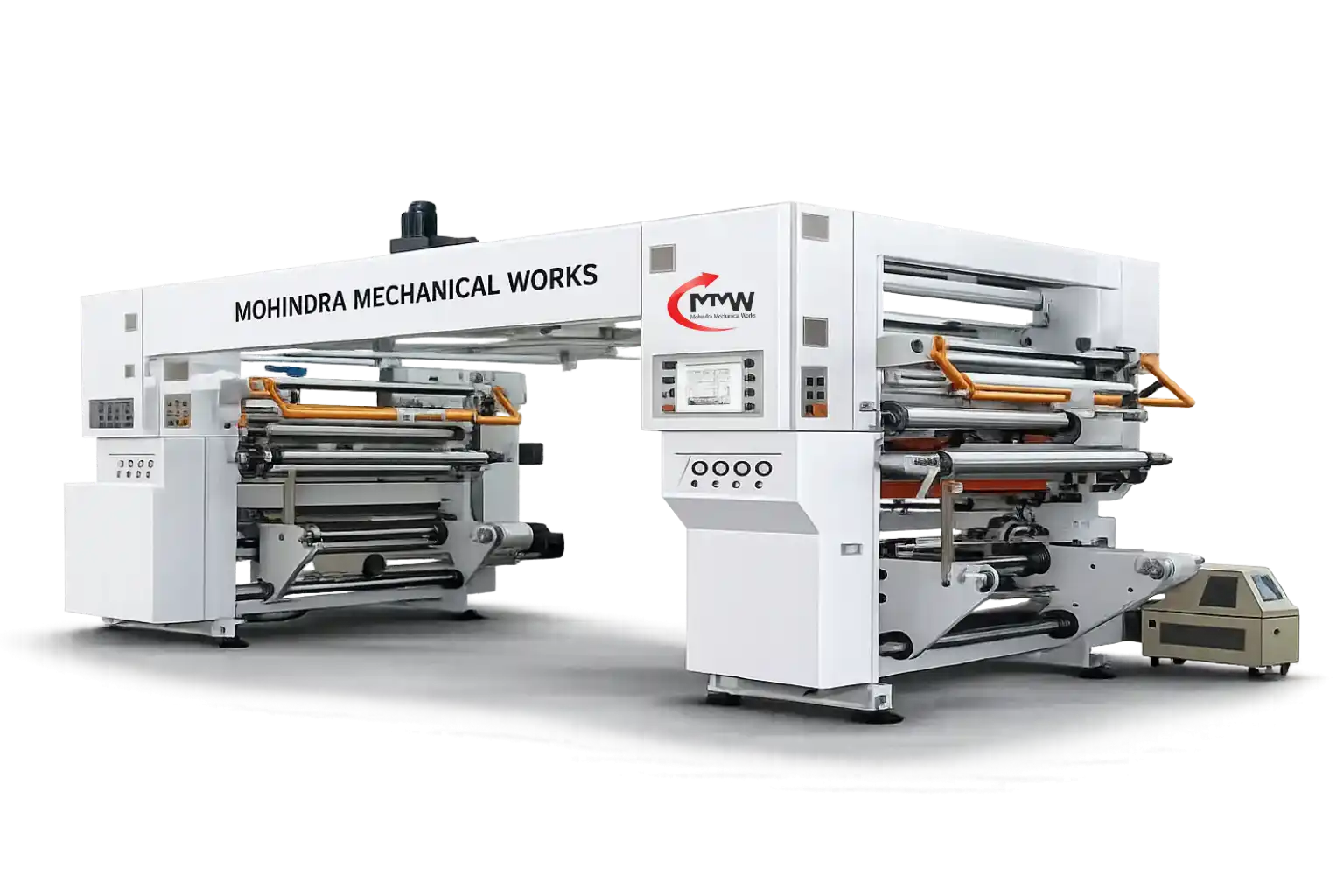
Registered Lamination Machine
Precision Lamination for Accurate Print-to-Print Registration
Our Registered Lamination Machine is designed for flexible packaging applications where accurate alignment between pre-printed substrates is essential. The machine uses a registration control system to maintain precise synchronization between printed designs during the lamination process.
With controlled web tension, registration monitoring, accurate adhesive application and stable web handling, the machine helps achieve consistent print alignment throughout continuous production. It is suitable for specialized flexible packaging where graphics, patterns or printed elements on multiple layers must match accurately.
Request a Quote
Contact us today for machine specifications, pricing, and customized solutions.
Accurate Registration for Pre-Printed Laminates
Registered lamination requires more than conventional web-to-web bonding. When two printed substrates are combined, even minor variations in web tension or material movement can cause the printed designs to shift out of position.
The machine continuously monitors registration marks on the web and makes necessary corrections to maintain alignment during production. Coordinated tension and web-control systems further support stable substrate movement through the laminating section.
This provides converters with better control when producing packaging structures requiring print-to-print or pattern-to-pattern registration.
Designed for Specialized Flexible Packaging
The Registered Lamination Machine can be configured for compatible flexible substrates such as PET, BOPP, CPP, PE and metallized films, depending on the lamination process, adhesive system and application requirements.
Its registration-control arrangement is particularly useful for packaging designs containing windows, graphics, decorative patterns or other elements that must remain aligned between laminated layers.
Precise web guiding and controlled rewinding help maintain material stability from unwinding through lamination to the finished roll.
Why Choose Registered Lamination?
Conventional lamination primarily focuses on bonding two substrates, whereas registered lamination adds the requirement of maintaining a defined positional relationship between printed layers.
A dedicated registration system detects printed reference marks and controls web position to minimize registration variation during production.
This capability enables packaging converters to manufacture more complex and visually distinctive laminate structures while maintaining consistent alignment across the production roll.
35+ Years of Manufacturing Experience
Precision Engineering & Quality Manufacturing
Customized Machine Configurations to Your Needs
Fast and Reliable After-Sales Support
Packaging Applications
- Specialty Flexible Laminates: Supports customized multilayer structures requiring accurate alignment between compatible substrates.
- Promotional Packaging: Suitable for packaging designs where multiple printed elements need to maintain a predetermined position.
- Food & Snack Packaging: Produces registered laminate structures for selected food, snack and confectionery packaging applications.
- Decorative Flexible Packaging: Suitable for premium packaging designs incorporating registered patterns, graphics or visual effects.
- Print-to-Print Lamination: Used for compatible pre-printed webs where graphics on different layers require controlled positional alignment.
- Registered Window Packaging: Suitable for packaging structures where transparent or printed window areas need to align with graphics on another substrate.
Key Features
- Pre-Printed Substrate Handling: Designed for applications involving compatible printed films and registered laminate structures.
- Stable Lamination Control: Maintains consistent substrate contact through the laminating section.
- Accurate Adhesive Application: Provides controlled adhesive transfer according to the selected lamination process.
- Precision Web Guiding: Keeps substrates correctly positioned before and during lamination.
- Controlled Web Tension: Maintains stable web movement to support consistent registration accuracy.
- Automatic Registration Correction: Helps compensate for registration variation during continuous production.
- Registration Mark Detection: Detects reference marks on the printed web for accurate positional control.
Frequently Asked Questions
Yes. Registration control, working width, substrate handling and other machine parameters can be configured according to the intended packaging application.
Yes. Registered lamination can be used for selected packaging structures where a window, printed area or other design element needs to maintain a specific position relative to another layer.
Depending on machine configuration, adhesive and application, compatible substrates can include PET, BOPP, CPP, PE, metallized films and other flexible packaging materials.
Yes, the machine can be configured for print-to-print registered lamination of compatible substrates, subject to the required registration system and job specifications.
A standard lamination machine primarily controls bonding and web handling. A registered lamination machine additionally controls the relative position of printed elements between the substrates.
The system detects registration marks on the moving web and uses this information to make controlled corrections, helping maintain the required alignment during lamination.
A Registered Lamination Machine is designed to laminate compatible substrates while maintaining a defined alignment between printed graphics, patterns or registration marks on the webs.