
No Plastic or Aluminium Foil: The Future of Pan Masala Packaging
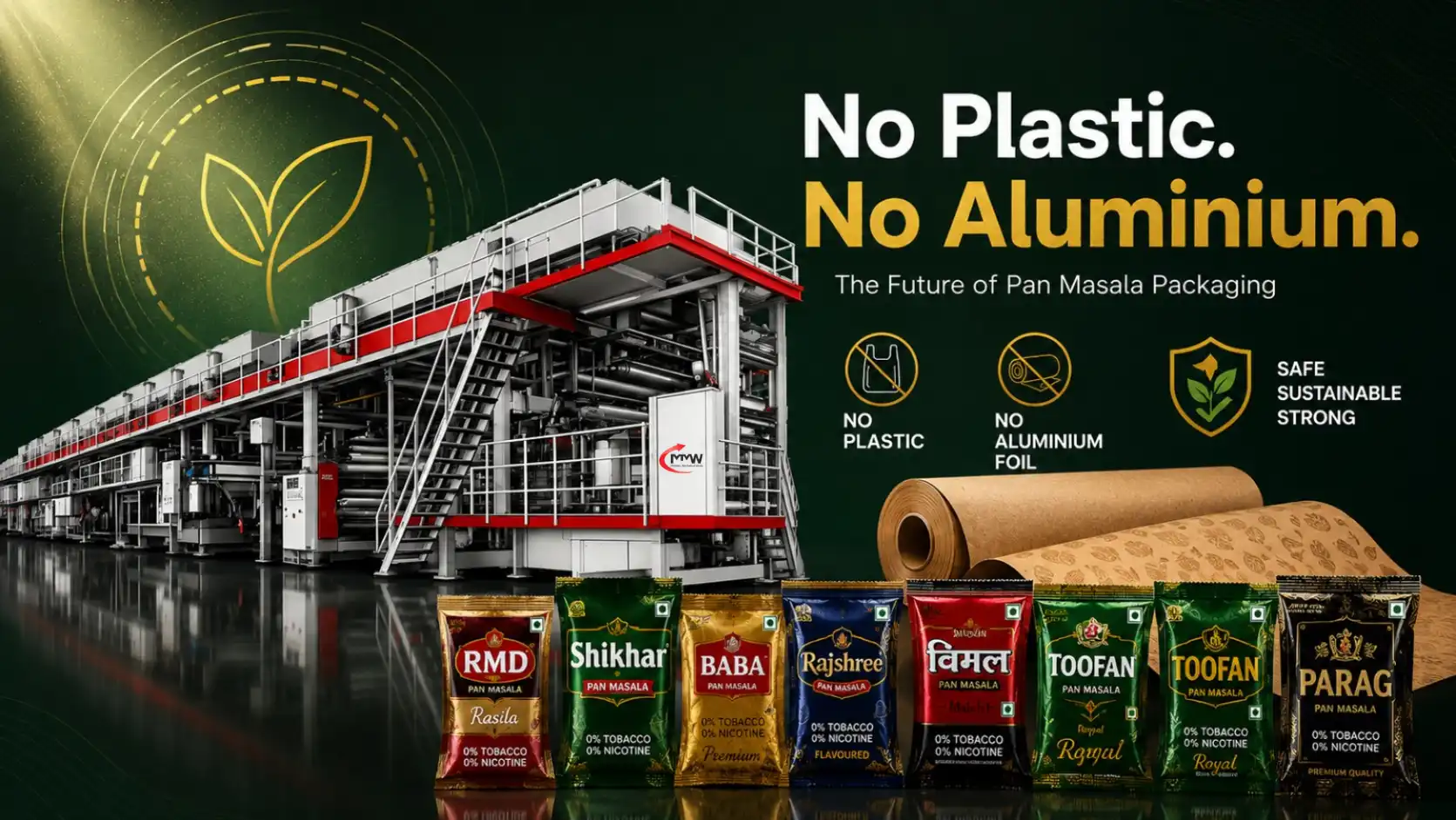
The pan masala packaging industry is entering a new phase as regulatory attention increases on the materials used for packaging. Recent reports about new FSSAI requirements have highlighted a shift away from conventional plastic, synthetic polymer and aluminium-based packaging structures for pan masala.
This change is important for pan masala manufacturers, packaging converters and paper coating companies because the industry now needs to explore suitable alternative packaging materials without compromising product protection, printing quality and pouch performance.
One technology that can support this transition is the Pan Masala Pouch Coating Machine, which is designed to apply functional coatings to paper rolls for pouch manufacturing applications.
What Is Changing in Pan Masala Packaging?
Traditional flexible packaging structures can include different layers of plastic, polymer films, aluminium foil or metallised materials. These structures are widely used because they can provide barrier properties, strength and protection.
However, with the latest regulatory developments, manufacturers are being encouraged to evaluate alternative packaging materials that comply with the applicable FSSAI requirements.
The move towards paper-based packaging creates a new requirement: paper needs to deliver better resistance and functional performance for use in pouch applications. This is where coating technology becomes important.
Why Is Coated Paper Important?
Paper is a renewable and widely used packaging material, but untreated paper may not provide the barrier performance required for every pouch application.
A suitable coating can improve the functional properties of paper and help provide resistance against moisture, grease and other external factors, depending on the coating formulation and final packaging structure.
The coating is applied over the paper surface in a controlled manner. After drying, the coated paper can be processed through printing, slitting and pouch-making operations according to the required packaging design.
Therefore, paper coating technology can become an important part of developing alternative pan masala pouch structures.
Role of a Pan Masala Pouch Coating Machine
A Pan Masala Pouch Coating Machine is used for continuous roll-to-roll coating of paper. The machine applies a controlled layer of coating material across the paper web and then dries and rewinds the coated material.
For manufacturers, consistent coating is extremely important. Variations in coating thickness can affect the performance of the finished paper and may create difficulties during printing, converting or pouch formation.
A properly designed coating machine helps maintain better control over:
✦ Coating application
✦ Coating thickness
✦ Web tension
✦ Drying
✦ Rewinding
✦ Production speed
✦ Overall coating consistency
This makes coating machinery an important investment for companies exploring paper-based pan masala packaging solutions.
Advantages of Coating Technology for Pan Masala Pouches
Better Barrier Performance
Depending on the selected coating formulation, coated paper can provide improved resistance against moisture, grease and other environmental factors compared with untreated paper.
Aluminium-Free Packaging Development
Manufacturers looking to move away from aluminium or metallised layers can evaluate coated-paper structures for suitable pouch applications, subject to regulatory and technical validation.
Consistent Roll-to-Roll Production
Modern coating machines allow paper to be coated continuously in roll form. This can support higher production efficiency and consistent output.
Suitable for Different Paper Grades
The machine can be configured according to the paper GSM, coating type, coating weight and production requirements.
Better Control Over Coating
Controlled coating application helps manufacturers achieve more uniform results across the entire paper roll.
Mohindra Engineering Company – Pan Masala Pouch Coating Machine
Mohindra Engineering Company manufactures the Pan Masala Pouch Coating Machine for roll-to-roll paper coating applications.
The machine is designed for applying functional coatings on paper used for pan masala pouch applications. Depending on the configuration, the system can support coating methods such as Air Knife, Reverse Gravure and Comma Coating.
The machine specifications can be configured according to production requirements, including coating width, paper GSM, coating weight, drying system and rewinding requirements.
The listed machine configuration supports production speeds of up to 150 MPM, with paper GSM and coating weight selected according to the specific application and coating formulation.
For manufacturers looking to explore paper-based and aluminium-free packaging structures, this type of coating equipment can provide the necessary production platform for developing coated paper rolls.
The Future of Pan Masala Packaging
The recent regulatory developments are likely to encourage manufacturers and packaging converters to look more closely at alternative packaging materials.
The future of pan masala packaging will not simply depend on replacing aluminium foil or plastic with ordinary paper. The packaging must also provide the required protection, appearance, printability, durability and converting performance while meeting applicable food-contact and regulatory requirements.
This is why paper coating technology can play an important role in the next generation of pan masala packaging.
With the right paper, approved coating formulation and suitable coating equipment, manufacturers can explore new packaging structures that reduce dependence on conventional aluminium and plastic-based materials.
Mohindra Engineering Company provides industrial coating machinery for manufacturers and converters looking to develop modern coated-paper solutions for changing packaging requirements.
Note: FSSAI regulations and permitted packaging materials may be updated from time to time. Manufacturers should always verify the latest official requirements before commercial production.
About info@mohindraengineeringcompany.com
View all posts by info@mohindraengineeringcompany.comSearch
Recent Posts




Categories
- Coating Machine (7)
- Flexo (2)
- Lamination Machine (2)
- Rotogravure (6)