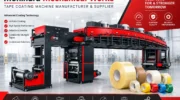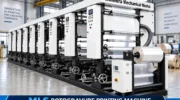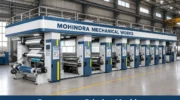
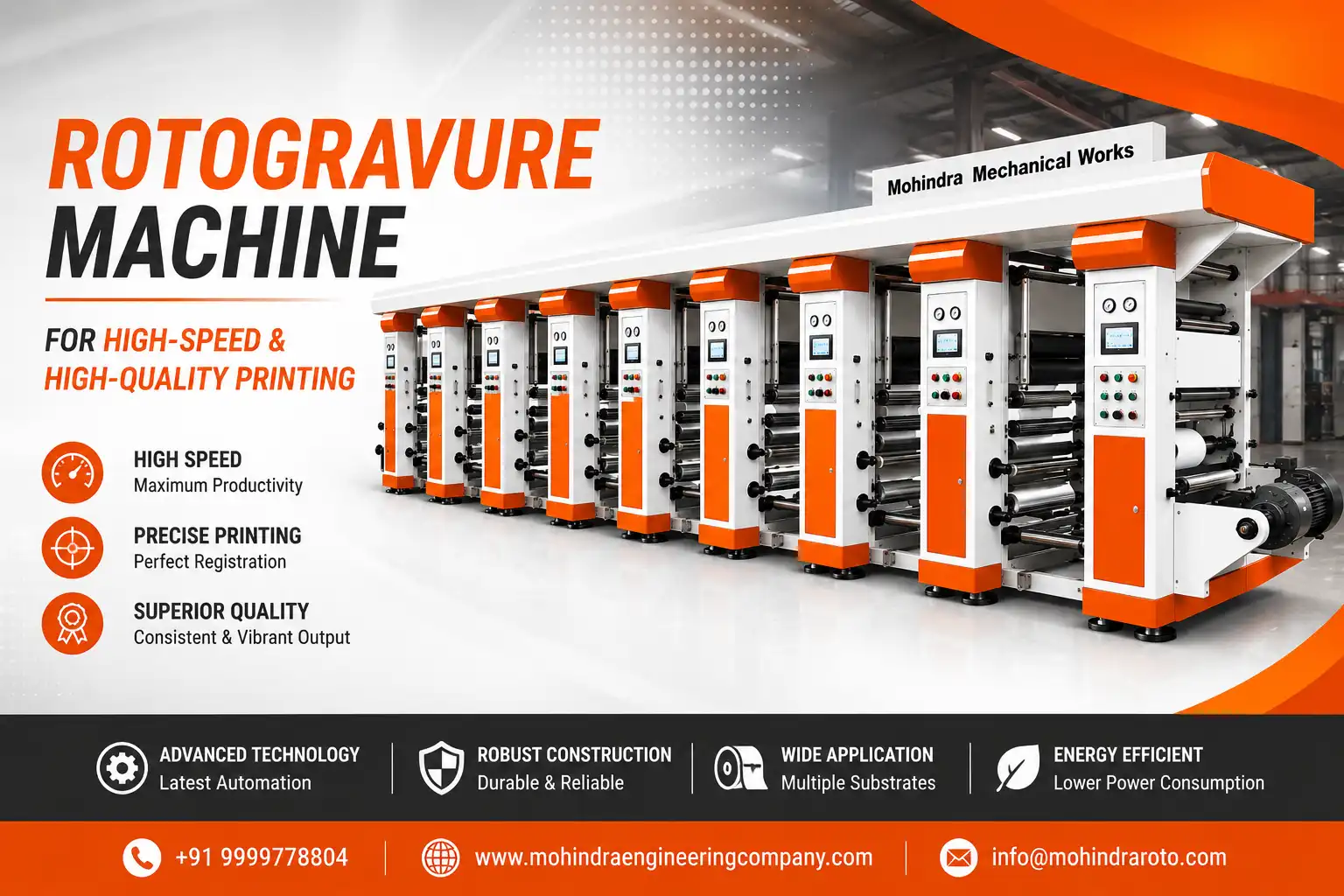
A Rotogravure Machine is one of the most reliable technologies in industrial printing—capable of delivering sharp color reproduction, precise registration, and consistent output across long production runs. This guide covers everything you need to know: how these machines work, the different types available, which industries use them, and how to choose the right model for your production requirements.
Key Takeaways
- A Rotogravure Printing Machine uses engraved cylinders to transfer ink onto flexible substrates like film, foil, and paper with exceptional consistency.
- Machine types include Shaftless, Shafted, MLS, and ELS models—each suited to different speed and automation requirements.
- These machines are widely used in flexible packaging, pharmaceuticals, food and beverage, and the paper and print industries.
- Key performance factors include color registration accuracy, web tension control, drying efficiency, and printing speed.
- Choosing an Indian manufacturer like Mohindra Engineering Company offers advantages in customization, cost, and after-sales support.
What Is a Rotogravure Machine?
A Rotogravure Machine is an industrial printing system that uses precisely engraved cylinders to transfer ink directly onto a moving substrate—such as plastic film, aluminum foil, or paper. Each cylinder corresponds to a single color, and as the substrate passes through multiple printing stations, colors are applied in sequence to build up the final design.
This method is especially suited to high-volume production. The engraved cells on each cylinder hold a fixed amount of ink, which means every print is virtually identical to the last—whether you’re producing a thousand meters or a million. That consistency is what makes gravure printing the preferred choice for packaging manufacturers worldwide.
Key Features of a High-Quality Rotogravure Machine
Understanding what separates a well-engineered machine from a basic one helps when evaluating your options. Here are the features that matter most:
- Precise Color Registration: An automatic registration control system keeps each color perfectly aligned across printing stations, ensuring sharp graphics and clean text—even at high speeds.
- Stable Web Tension Control: Controlled unwinding, printing, and rewinding maintain consistent material tension throughout the run, preventing stretching, wrinkling, and misregistration.
- Efficient Hot-Air Drying System: Ink must dry between each printing station to avoid smearing and color contamination. A well-designed drying system supports continuous operation on films, foil, and paper.
- Multiple Color Configurations: Machines are available in 2, 4, 6, 8, 10, or 12 color configurations to match a wide range of packaging design requirements.
- Customizable Build: Printing width, color units, unwind diameter, rewind diameter, drying method, and automation level can all be tailored to specific production needs.
- Robust Construction: A strong machine frame minimizes vibration during operation, which directly contributes to print quality and long-term mechanical reliability.
How Does a Rotogravure Machine Work?
The working principle is straightforward. The substrate—typically a roll of film, foil, or paper—is fed from an unwinding unit through a series of printing stations. At each station, an engraved cylinder rotates through an ink tray, filling its surface cells with ink. A doctor blade then wipes away excess ink from the cylinder’s surface, leaving ink only inside the engraved cells. As the substrate presses against the cylinder, the ink transfers cleanly onto the material.
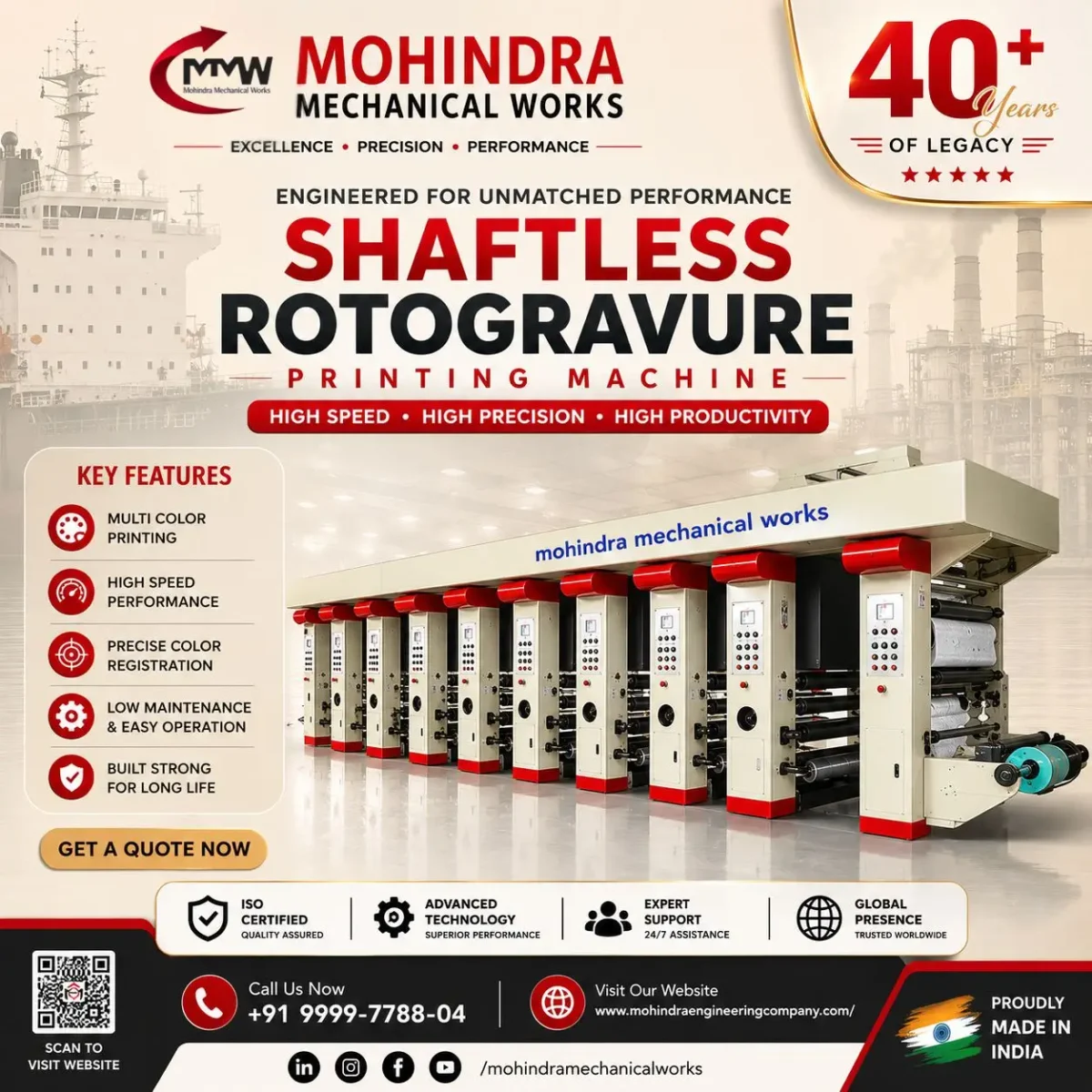
After each color is applied, the substrate passes through a hot-air drying unit before moving to the next station. Once all colors have been printed and dried, the finished material is wound back onto a roll by the rewinding unit. Tension control systems operate throughout this process to maintain consistent substrate handling from start to finish.
Types of Rotogravure Machines
Different production environments call for different machine configurations. Mohindra Engineering Company offers a complete range of Industrial Rotogravure Machines to meet varying speed, substrate, and automation requirements.
| Machine Type | Max Speed | Max Web Width | Best For |
|---|---|---|---|
| Shaftless Rotogravure Printing Machine | 180–200 m/min | Up to 1500 mm | Long continuous runs, fast roll handling |
| Shafted Rotogravure Printing Machine | 180–200 m/min | Up to 1000 mm | Heavy-duty output, steady web tension |
| MLS Rotogravure Printing Machine | Up to 220 m/min | Up to 1250 mm | Stable web handling, precise multi-color alignment |
| ELS Rotogravure Printing Machine | 300–320 m/min | Up to 1300 mm | Highest registration accuracy, top-speed production |
MLS vs. ELS — Which Should You Choose?
An MLS Rotogravure Printing Machine uses a mechanical line shaft to synchronize its printing units. It is a reliable, cost-effective choice for medium-to-high speed production. An ELS Rotogravure Printing Machine uses electronically synchronized individual motors, offering superior registration control and simpler adjustments at speeds up to 320 m/min. Choose ELS when color accuracy and maximum throughput are the top priorities.
Applications and Industries
The Multi Colour Rotogravure Printing Machine serves a broad range of industries where print quality, speed, and consistency are non-negotiable.
Flexible Packaging Industry
The most common application. Machines print on BOPP, PET, PVC, CPP, LDPE, HDPE, metallized film, and laminated packaging for products ranging from snack pouches and rice bags to courier bags used by major e-commerce brands.
Pharmaceutical Industry
Specialized machines deliver hygienic, high-accuracy printing on aluminum foil for blister packs, strip packs, and alu-alu foil—where legibility and precision directly affect regulatory compliance.
Food and Beverage Industry
Printing on frozen food packaging, dairy product wraps, tea and coffee pouches, biscuit wrappers, and spice bags demands vibrant colors and durable ink adhesion. Gravure printing meets both requirements reliably.
Paper and Print Industry
High-Speed Printing Machines in this category handle decorative paper, wallpaper, gift wrap, magazines, and abri paper rolls at high volume with consistent output.
Benefits of Using a High-Speed Rotogravure Machine
Investing in a High-Speed Rotogravure Machine delivers measurable advantages across production efficiency, print quality, and long-term cost management.
- Consistent Print Quality at Scale: The engraved cylinder method produces identical results across every meter of a production run—critical for brand consistency in packaging.
- High Production Output: Operating speeds of up to 320 m/min on ELS models allow manufacturers to meet large volume orders without compromising quality.
- Versatile Material Compatibility: A single machine can handle a wide range of substrates—films, foils, paper, and laminates—reducing the need for separate equipment.
- Reduced Waste: Stable web tension and precise registration minimize substrate wastage caused by misalignment or print errors.
- Scalable Configurations: Whether a business needs 2-color output or 12-color designs, the machine can be configured to match current requirements and scaled as demand grows.
Why Choose an Indian Rotogravure Machine Manufacturer?
Sourcing a Rotogravure Machine in India from a domestic manufacturer offers several practical advantages over importing from overseas suppliers.
Cost Efficiency: Indian manufacturers offer competitive machine pricing without sacrificing engineering quality, making advanced gravure technology accessible to mid-scale packaging operations.
Customization Capability: Manufacturers like Mohindra Engineering Company build machines to order. Printing width, color count, automation level, unwind and rewind diameter—all can be specified based on the customer’s exact production requirements.
After-Sales Support: Proximity matters when a machine needs servicing. Local manufacturers provide faster installation, operator training, and maintenance support—reducing production downtime.
Export Track Record: Leading Indian manufacturers supply machines to packaging industries across South Asia, the Middle East, and Africa, demonstrating reliability at an international level.
How to Select the Right Rotogravure Machine for Your Needs
Choosing the right Flexible Film Printing Machine depends on a clear understanding of your production requirements. Consider the following factors before making a decision:
- Substrate Type: Identify the primary materials you’ll be printing on—BOPP, PET, foil, paper, or laminates. This affects machine configuration, ink system, and drying requirements.
- Number of Colors: How many colors does your packaging design require? Choose a configuration that covers your current designs and leaves room for future requirements.
- Required Production Speed: High-volume operations benefit from ELS or MLS models. For smaller or more flexible runs, shafted or shaftless models may be more appropriate.
- Printing Width: Match web width to your roll sizes and packaging dimensions to avoid unnecessary waste or re-tooling costs.
- Automation Level: Manual, semi-automatic, and fully automatic configurations are available. Higher automation reduces operator dependency and improves consistency across shifts.
- After-Sales Support: Confirm that the manufacturer provides installation, commissioning, and operator training as part of the purchase agreement.
Ready to Upgrade Your Printing Line?
A well-chosen Gravure Printing Machine is a long-term production asset—one that directly affects the quality of your packaging, the efficiency of your operations, and your ability to meet customer demands at scale. Selecting the right model, with the right specifications, makes all the difference.
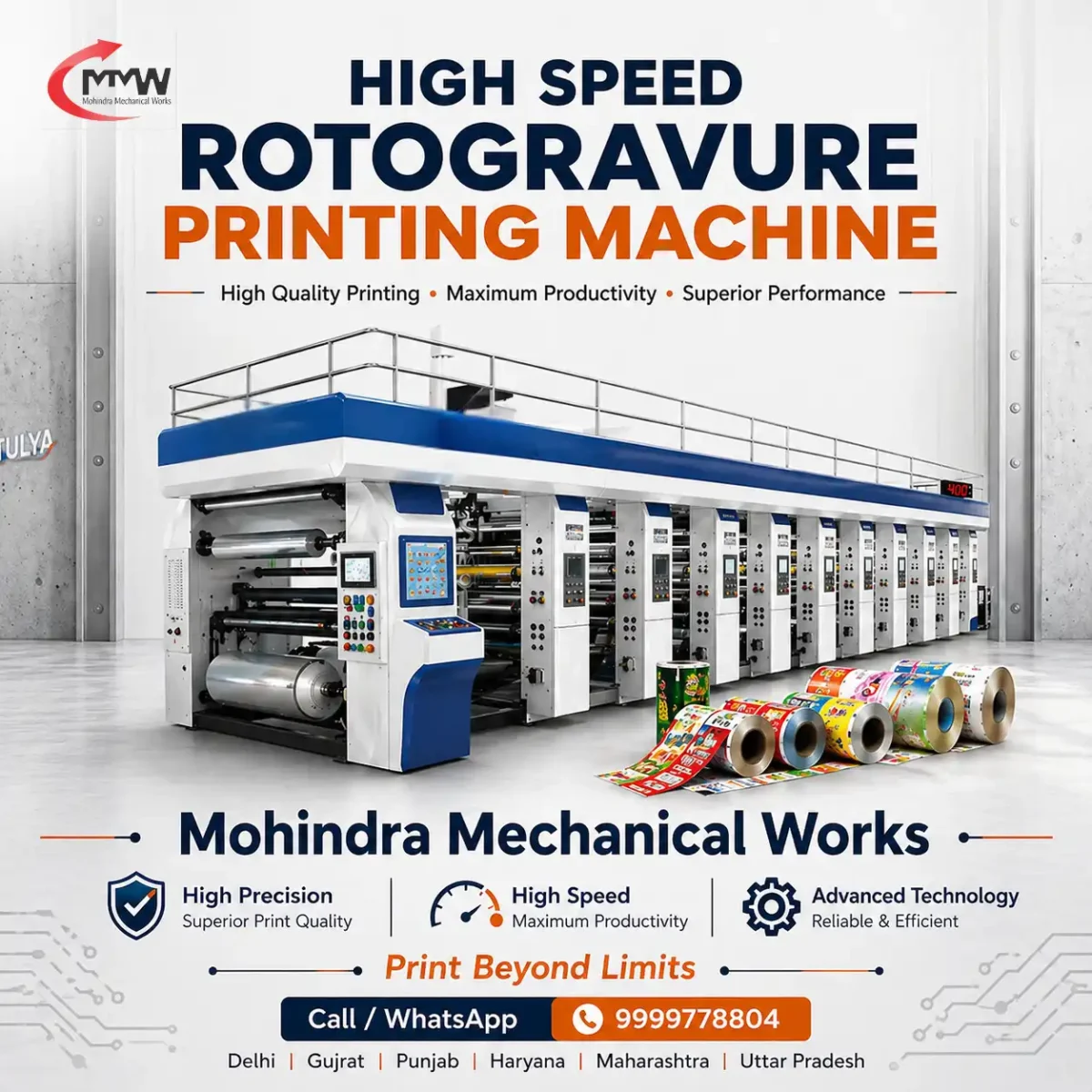
Mohindra Engineering Company designs and manufactures a complete range of rotogravure printing machines for the flexible packaging, pharmaceutical, food, and paper industries. Every machine is built to order, with full customization options and dedicated after-sales support.
Contact the Mohindra Engineering team today to discuss your machine requirements and receive a customized quotation.
Frequently Asked Questions
What is a Rotogravure Machine used for?
A Rotogravure Machine is used for high-volume, high-quality printing on flexible substrates including plastic films, aluminum foil, and paper. It is commonly used in flexible packaging, pharmaceutical packaging, food and beverage packaging, and the paper and print industries.
What is the difference between a Shaftless and Shafted Rotogravure Printing Machine?
A Shaftless Rotogravure Printing Machine allows faster and simpler roll handling without a mechanical shaft, making it better suited for long continuous runs. A Shafted Rotogravure Printing Machine uses a physical shaft for roll support, offering steady web tension control—ideal for heavy-duty industrial output.
How many colors can a Rotogravure Machine print?
Machines are available in 2, 4, 6, 8, 10, or 12 color configurations. The correct number depends on the complexity of the packaging design and the production requirements of the manufacturer.
What materials can be printed on a Rotogravure Machine?
Depending on the configuration, these machines can print on BOPP, PET, PVC, CPP, LDPE, HDPE, metallized film, aluminum foil, kraft paper, coated paper, and laminated packaging materials.
What is the maximum speed of a Rotogravure Printing Machine?
Speed varies by model. Shafted and Shaftless models operate at 180–200 m/min. The MLS model reaches up to 220 m/min. The ELS model—using electronic line shaft technology—achieves the highest speeds at 300–320 m/min.
Can printing width be customized?
Yes. Printing width and web width can be customized based on packaging material dimensions, roll size, and required production capacity.
Is operator training provided with the machine?
Yes. Installation, commissioning, and operator training can be arranged based on order terms and the installation location.
What is the difference between an MLS and ELS Rotogravure Machine?
An MLS machine uses a mechanical line shaft to coordinate printing units, offering stable performance at medium-to-high speeds. An ELS machine uses individually synchronized electronic motors, providing higher registration accuracy and greater control at speeds up to 320 m/min—making it the preferred choice for demanding, high-speed production environments.