What Is Flexographic Printing Machine? The Complete 2026 Guide
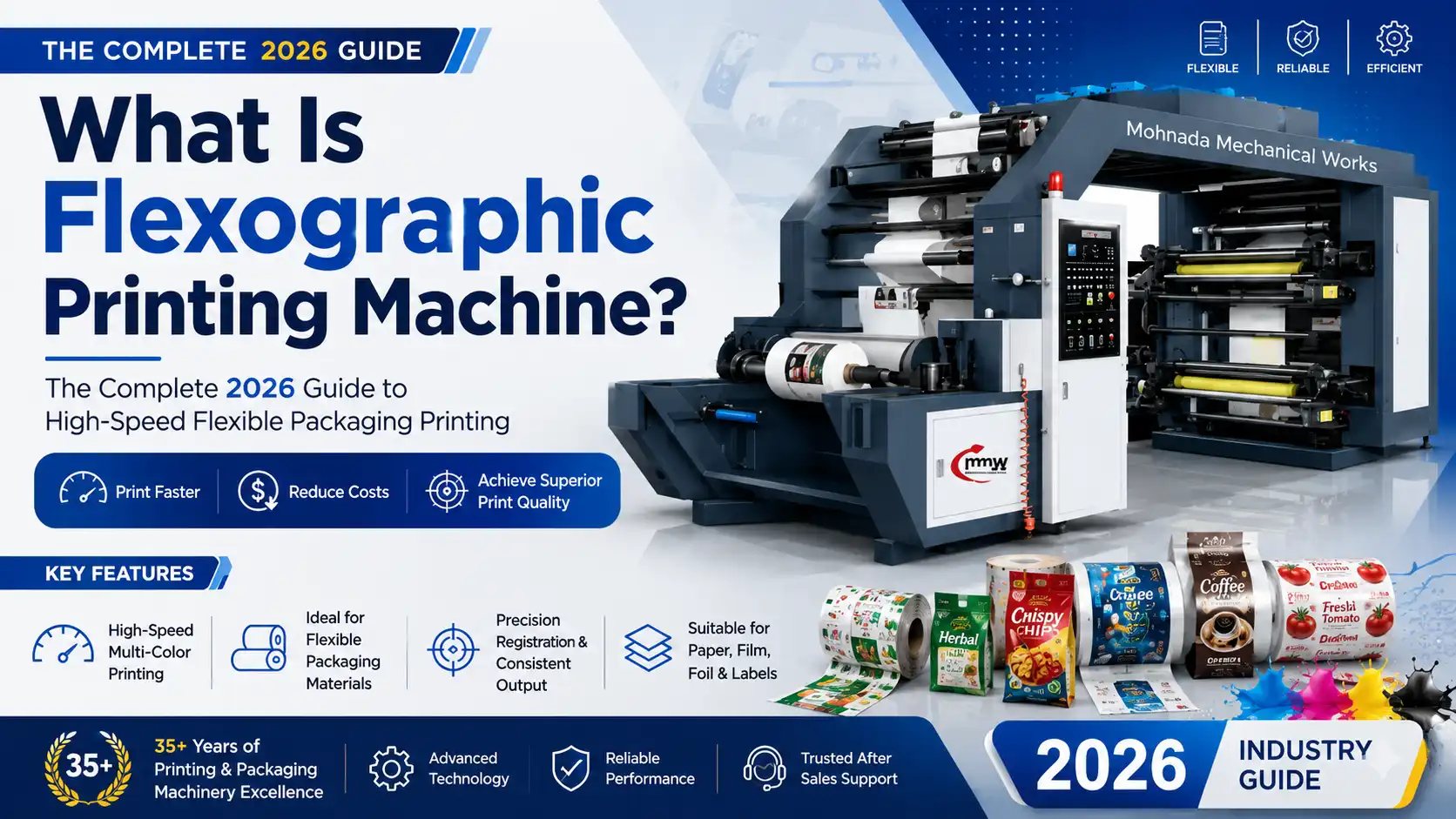
Flexographic printing, often referred to as Flexo Printing, is a high-speed printing process that uses flexible photopolymer plates to transfer ink onto various substrates. It is one of the most widely used printing technologies in the packaging industry due to its ability to print on paper, plastic films, foil, labels, corrugated boxes, and other packaging materials with exceptional speed and efficiency.
Today, flexographic printing is considered the backbone of modern packaging production. From food packaging and pharmaceutical labels to shopping bags and corrugated cartons, flexo printing plays a vital role in delivering high-quality printed products.
At Mohindra Engineering Company, we manufacture advanced Flexographic Printing Machines designed to provide superior print quality, high productivity, and long-lasting performance for packaging manufacturers worldwide.
How Does Flexographic Printing Work?
Flexographic printing follows a precise and efficient process that ensures consistent print quality and high production speeds.
Plate Preparation
The artwork is digitally created and transferred onto flexible photopolymer plates. These plates contain raised image areas that carry the ink during printing.
Plate Mounting
The printing plates are accurately mounted onto printing cylinders to ensure proper registration and alignment.
Ink Transfer Through the Anilox Roller
An anilox roller, engraved with millions of microscopic cells, picks up ink from the ink chamber and transfers a controlled amount of ink to the printing plate.
Doctor Blade System
The doctor blade removes excess ink from the anilox roller, ensuring a precise and consistent ink supply for high-quality printing.
Printing on the Substrate
The inked printing plate transfers the image onto the substrate, which may be paper, plastic film, foil, labels, or corrugated board.
Drying and Curing
The printed material passes through a drying or curing system. Modern flexographic presses often use UV or LED-UV curing technology for faster drying and improved print durability.
Finishing Operations
Additional processes such as laminating, coating, die-cutting, slitting, and rewinding can be completed inline, improving efficiency and reducing production time.
Latest Trends in Flexographic Printing
The flexographic printing industry continues to evolve with advancements in automation, digital integration, and sustainable printing technologies.
Hybrid Printing Technology
Hybrid presses combine traditional flexographic printing with digital printing systems. This allows manufacturers to produce large volumes while adding variable data, QR codes, serial numbers, and personalized content.
Automated Registration Systems
Modern flexographic presses use automated registration controls to reduce setup times, minimize material waste, and improve production efficiency.
LED-UV Curing Technology
LED-UV curing systems offer instant drying, lower energy consumption, reduced maintenance requirements, and environmentally friendly operation.
Smart Manufacturing and Industry 4.0
LED-UV curing systems offer instant drying, lower energy consumption, reduced maintenance requirements, and environmentally friendly operation.
Flexographic Printing vs. Digital Printing
Choosing between flexographic and digital printing depends on production volume, application requirements, and budget.
|
Flexographic Printing |
Digital Printing |
|---|---|
|
Ideal for large production runs |
No printing plates required |
|
Lower cost per unit at high volumes |
Best suited for short-run jobs |
|
Faster production speeds |
Faster design changes |
|
Excellent color consistency |
Supports variable data printing |
|
Suitable for flexible packaging and labels |
Ideal for customized packaging |
Which Printing Method Is Better?
Digital printing is generally more suitable for short-run and customized jobs. However, for large-scale packaging production, flexographic printing remains the most cost-effective and efficient solution.
Materials Used in Flexographic Printing
One of the biggest advantages of flexographic printing is its ability to print on a wide range of substrates.
|
Paper-Based Materials |
Plastic Films |
Specialty Materials |
|---|---|---|
|
Kraft paper |
BOPP film |
Aluminum foil |
|
Duplex board |
PET film |
Laminated packaging materials |
|
Folding cartons |
PE film |
Labels and stickers |
|
Corrugated boxes |
CPP film |
Flexible packaging films |
Types of Inks Used in Flexographic Printing
Water-Based Inks
These environmentally friendly inks are commonly used for paper packaging and corrugated box printing.
Solvent-Based Inks
Solvent-based inks provide excellent adhesion and durability on plastic films and flexible packaging materials.
UV and LED-UV Inks
These inks cure instantly and offer superior gloss, durability, and print quality.
Advantages of Flexographic Printing
- Inline Finishing Capabilities: Printing, coating, laminating, die-cutting, and slitting can all be performed in a single production cycle.
- Durable Print Quality: Flexographic inks provide excellent resistance to moisture, abrasion, and environmental conditions.
- Excellent Material Compatibility: Flexographic printing can be used on both porous and non-porous materials.
- Cost-Effective for High Volumes: Once the printing plates are prepared, the cost per unit becomes very low, making flexo ideal for long production runs.
- High Production Speed: Flexographic presses are capable of producing large quantities of printed material in a short period.
Limitations of Flexographic Printing
- Design changes may require new printing plates
- Longer setup timeLess economical for very short production runss compared to digital printing
- Longer setup times compared to digital printing
- Higher initial setup costs due to plate production
Applications of Flexographic Printing
Flexographic printing is widely used in various industries, including:
- Labels and stickers
- FMCG packaging
- Pharmaceutical packaging
- Food packaging
- Retail packaging
- Industrial packaging
- Flexible packaging
- Corrugated box printing
Why Choose Mohindra Engineering Company?
Mohindra Engineering Company is a trusted manufacturer of high-quality Flexographic Printing Machines. Our machines are engineered to deliver:
- Low maintenance requirements
- Excellent print quality
- High-speed production
- Long service life
- Advanced automation features
- Energy-efficient operation
Conclusion
Flexographic printing remains one of the most efficient and cost-effective printing technologies for the packaging industry. Its ability to print on a wide range of materials, deliver high-speed production, and maintain excellent print quality makes it the preferred choice for manufacturers worldwide.
As the demand for innovative and sustainable packaging continues to grow, advanced Flexographic Printing Machines from Mohindra Engineering Company help businesses stay competitive while achieving higher productivity and profitability.
About info@mohindraengineeringcompany.com
View all posts by info@mohindraengineeringcompany.comSearch
Recent Posts
Categories
- Coating Machine (7)
- Flexo (2)
- Lamination Machine (2)
- Rotogravure (6)